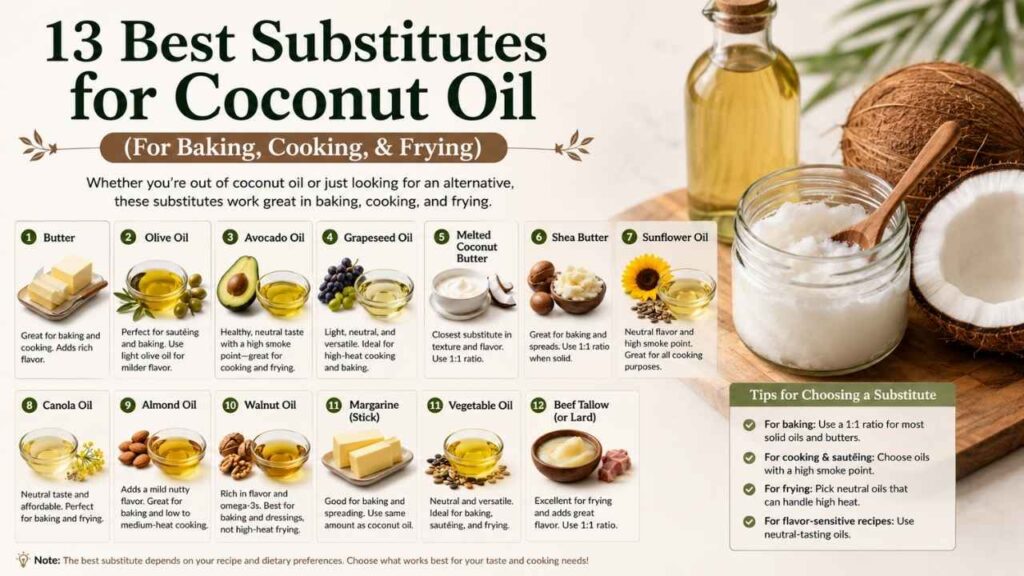

Looking for the best substitutes for coconut oil? Whether you ran out of coconut oil, dislike its flavor, or need a healthier option, several ingredients can work just as well. The right coconut oil substitute depends on how you plan to use it. Some alternatives perform better in baking, while others work best for frying, roasting, or everyday cooking.
Many people search for a substitute for coconut oil in baking, cookies, brownies, and cakes because coconut oil adds moisture and texture. Others need a coconut oil replacement for high-heat cooking or a vegan recipe. Fortunately, ingredients like butter, olive oil, avocado oil, vegetable oil, and vegan butter can replace coconut oil with excellent results.
In this guide, you’ll discover the best substitute for coconut oil for different recipes, learn proper substitution ratios, and find the most suitable alternative based on flavor, texture, and cooking method.
Quick Answer
The best substitute for coconut oil depends on your recipe and dietary needs. For most baking recipes, butter offers the closest texture and richness. If you need a healthier option, avocado oil works well because it has a mild flavor and high smoke point. For vegan recipes, vegan butter is often the best replacement.
When cooking or frying, oils such as olive oil, sunflower oil, canola oil, and grapeseed oil provide excellent results. They offer a neutral flavor and perform well at different cooking temperatures.
If you’re looking for the healthiest substitute for coconut oil, avocado oil stands out because it contains more unsaturated fats and supports high-heat cooking. For people who want a substitute for coconut oil without coconut flavor, olive oil or vegetable oil can be excellent choices.
Best Coconut Oil Substitutes at a Glance
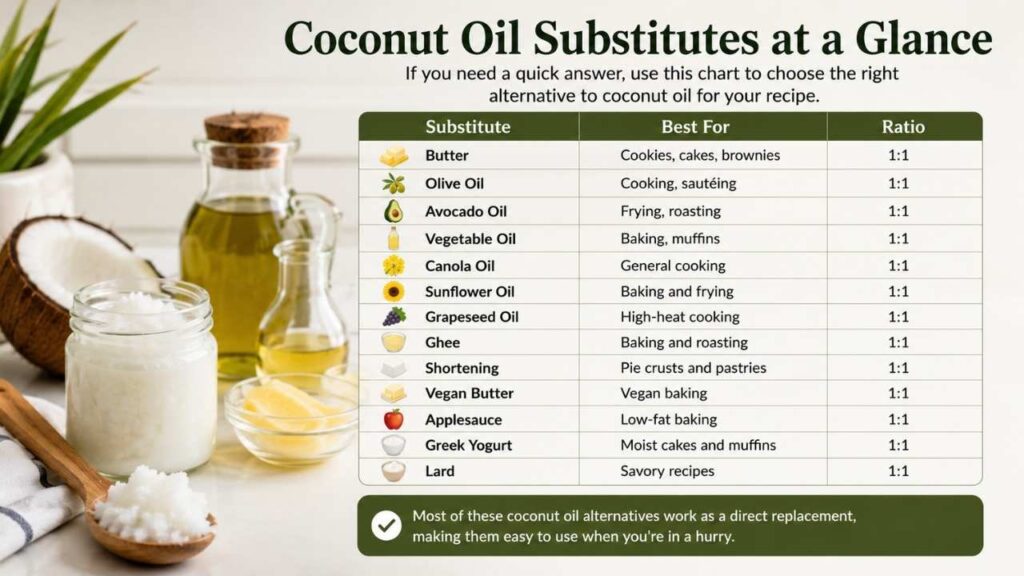
If you need a quick answer, use this chart to choose the right alternative to coconut oil for your recipe.
| Substitute | Best For | Ratio |
| Butter | Cookies, cakes, brownies | 1:1 |
| Olive Oil | Cooking, sautéing | 1:1 |
| Avocado Oil | Frying, roasting | 1:1 |
| Vegetable Oil | Baking, muffins | 1:1 |
| Canola Oil | General cooking | 1:1 |
| Sunflower Oil | Baking and frying | 1:1 |
| Grapeseed Oil | High-heat cooking | 1:1 |
| Ghee | Baking and roasting | 1:1 |
| Shortening | Pie crusts and pastries | 1:1 |
| Vegan Butter | Vegan baking | 1:1 |
| Applesauce | Low-fat baking | 1:1 |
| Greek Yogurt | Moist cakes and muffins | 1:1 |
| Lard | Savory recipes | 1:1 |
Most of these coconut oil alternatives work as a direct replacement, making them easy to use when you’re in a hurry.
Butter
Butter is one of the most popular substitutes for coconut oil in baking. Because both ingredients contain fat, butter creates a similar texture in cookies, cakes, brownies, muffins, and quick breads. Many bakers prefer butter because it adds richness and a pleasant flavor that complements sweet recipes.
Use butter as a 1:1 coconut oil replacement in most recipes. If a recipe calls for melted coconut oil, simply melt the butter before adding it. Butter also works well when you need a substitute for coconut oil in cookies or substitute for coconut oil in brownies, since it helps create soft centers and crisp edges.
The main difference is flavor. Coconut oil has a mild tropical taste, while butter provides a creamy dairy flavor. If you’re not following a vegan diet, butter remains one of the easiest and most reliable alternatives available.
Olive Oil
Olive oil is another excellent coconut oil substitute, especially for cooking and savory dishes. It adds moisture to baked goods and works well in sautéing, roasting, and everyday meal preparation. Many people use olive oil as a healthy coconut oil substitute because it contains beneficial unsaturated fats.
For baking, choose a light olive oil rather than an extra-virgin variety if you want a milder flavor. Strong olive oil can sometimes affect the taste of cakes and cookies. However, it performs very well as a substitute for coconut oil in cooking and vegetable dishes.
You can replace coconut oil with olive oil using a 1:1 ratio. This simple swap makes olive oil one of the most convenient pantry alternatives. If you’re searching for a coconut oil alternative for cooking, olive oil deserves a place near the top of your list.
Avocado Oil
Avocado oil is often considered the best healthy substitute for coconut oil. It has a neutral flavor, high smoke point, and smooth texture, making it suitable for both cooking and baking. Unlike some oils, it won’t overpower the flavor of your recipes.
Because of its high smoke point, avocado oil works exceptionally well as a substitute for coconut oil when frying, roasting vegetables, grilling, or stir-frying. It also performs well in cakes, muffins, and quick breads where moisture matters.
Use avocado oil in a 1:1 substitution ratio. Many health-conscious cooks prefer this oil because it contains heart-friendly fats and adapts easily to different recipes.
If you need a coconut oil replacement that handles high heat while maintaining a mild flavor, avocado oil is one of the strongest options available. It offers versatility, nutrition, and consistent results across many cooking methods.
Vegetable Oil
Vegetable oil is a simple and affordable substitute for coconut oil that works in many recipes. Its neutral flavor makes it an excellent choice when you do not want the oil to affect the taste of your food. Because it stays liquid at room temperature, vegetable oil is especially useful in cakes, muffins, quick breads, and pancakes.
You can use vegetable oil as a 1:1 coconut oil replacement in most baking recipes. It helps create moist baked goods and blends easily with other ingredients. Many home bakers use it as a substitute for coconut oil in cakes and muffins because it delivers reliable results.
Although vegetable oil works well in baking and cooking, it may not provide the same richness as butter or the structure needed for certain pastries. Still, it remains one of the easiest and most versatile coconut oil alternatives available.
Canola Oil
Canola oil is another popular alternative to coconut oil thanks to its mild taste and versatility. It works well in both sweet and savory recipes, making it a practical choice for everyday cooking. Since canola oil has a neutral flavor, it won’t overpower cakes, cookies, or breads.
Use canola oil in a 1:1 ratio when replacing coconut oil. It performs particularly well as a substitute for coconut oil in baking because it helps keep baked goods soft and moist. It also works well for frying, sautéing, and roasting vegetables.
Many people choose canola oil when they want a healthy coconut oil substitute with less saturated fat. Its mild flavor and affordable price make it a staple in many kitchens. If you’re looking for a dependable coconut oil replacement that works in almost any recipe, canola oil is a solid option.
Sunflower Oil
Sunflower oil offers a light taste and smooth texture, making it a useful coconut oil substitute for baking and cooking. It contains a mild flavor that blends well with sweet and savory dishes without changing their overall taste.
You can replace coconut oil with sunflower oil using a 1:1 substitution ratio. It works especially well in cakes, muffins, cookies, and quick breads where moisture is important. Because sunflower oil also has a relatively high smoke point, it can handle frying and roasting temperatures effectively.
Many cooks use sunflower oil as a substitute for coconut oil when frying because it performs well under heat while maintaining a neutral flavor profile. If you need a versatile pantry ingredient that works across various recipes, sunflower oil is an excellent alternative to coconut oil.
Grapeseed Oil
Grapeseed oil is a light and neutral-flavored oil that works well as a coconut oil replacement. Its high smoke point makes it particularly suitable for frying, roasting, grilling, and sautéing. Because it doesn’t have a strong flavor, it allows the other ingredients in your recipe to shine.
You can substitute grapeseed oil for coconut oil using a 1:1 ratio. It performs especially well in savory recipes and baked goods where a neutral taste is preferred. Many people choose grapeseed oil as a substitute for coconut oil without coconut flavor.
If your main goal is high-heat cooking, grapeseed oil is one of the most practical alternatives available. Its versatility and mild taste make it a reliable option for anyone looking for a simple cooking oil substitute.
Ghee
Ghee is clarified butter with a rich, nutty flavor. It works as a fantastic substitute for coconut oil in both cooking and baking. Because ghee contains concentrated butterfat, it adds richness and depth to recipes.
Use ghee as a 1:1 coconut oil replacement. It works especially well in roasted vegetables, baked goods, and savory dishes. Many cooks prefer ghee because it has a higher smoke point than regular butter, making it suitable for frying and sautéing.
If you’re not following a dairy-free diet, ghee can serve as one of the closest alternatives to coconut oil in terms of texture and cooking performance. Its rich flavor and versatility make it a valuable ingredient for many recipes.
Shortening
Shortening works best when a recipe relies on solid fat for structure. It is often used as a substitute for coconut oil in pie crusts, pastries, biscuits, and certain baked goods. Since shortening remains solid at room temperature, it can closely mimic the texture of coconut oil in many recipes.
Use shortening in a 1:1 ratio when replacing coconut oil. It creates flaky textures and helps baked goods maintain their structure. Unlike butter, shortening has a neutral flavor, making it suitable for recipes where you don’t want additional taste.
For bakers looking for a reliable coconut oil alternative for baking, shortening remains one of the best options available.
Vegan Butter
Vegan butter is often the best vegan substitute for coconut oil. It provides a similar texture and richness while keeping recipes completely plant-based. Most vegan butter products work well in cookies, cakes, brownies, and muffins.
You can use vegan butter as a 1:1 substitute for coconut oil in baking. It delivers similar moisture and structure while supporting vegan dietary needs. Many plant-based bakers prefer vegan butter because it closely resembles traditional butter in both flavor and performance.
If you need a dairy-free coconut oil substitute, vegan butter is one of the easiest and most effective choices available.
Applesauce
Applesauce offers a unique low-fat alternative to coconut oil in baking. Instead of adding fat, it adds moisture and natural sweetness to recipes. Many people use applesauce when they want to reduce calories without sacrificing texture.
You can generally replace coconut oil with applesauce using a 1:1 ratio, although some recipes may benefit from combining applesauce with another fat source. It works especially well in muffins, cakes, and quick breads.
Because applesauce changes texture slightly, it may not work as well in recipes that depend heavily on fat. However, it remains a great option for anyone seeking a lighter healthy coconut oil substitute.
Greek Yogurt
Greek yogurt can replace coconut oil in many baked goods while adding moisture and protein. It works particularly well in cakes, muffins, and quick breads where tenderness is important.
Use Greek yogurt as a 1:1 substitute for coconut oil in most baking recipes. It helps create soft textures and can reduce overall fat content. Many bakers choose Greek yogurt when they want a healthier alternative without compromising moisture.
Although Greek yogurt may slightly alter the flavor, it often improves texture and creates a rich, satisfying result. It’s a practical choice for anyone searching for a nutritious coconut oil replacement.
Lard
Lard is a traditional cooking fat that works well as a substitute for coconut oil in savory recipes. Because it remains semi-solid at room temperature, it can provide texture and structure similar to coconut oil.
Use lard in a 1:1 ratio when replacing coconut oil. It performs especially well in pie crusts, biscuits, roasting, and frying. Many cooks appreciate its ability to create flaky baked goods and crispy textures.
While lard isn’t suitable for vegetarian or vegan diets, it remains a dependable coconut oil alternative for many traditional recipes.
Best Coconut Oil Substitutes by Recipe Type
The best coconut oil substitute often depends on the recipe you’re making. For cookies, butter delivers rich flavor and texture. For brownies, butter or avocado oil creates moist results. In cakes and muffins, vegetable oil and canola oil work exceptionally well because they maintain softness.
For banana bread, canola oil, vegetable oil, or applesauce provide excellent moisture. When making granola, butter and vegetable oil help create crisp clusters. For pie crusts, shortening and lard provide the best flaky texture.
Matching the substitute to the recipe ensures better flavor, texture, and overall results.
Best Coconut Oil Substitutes for Baking
When baking, consider whether your recipe requires a solid fat or a liquid fat. Recipes like cookies and pie crusts often perform best with butter, shortening, or vegan butter. These ingredients help create structure and texture.
For cakes, muffins, and quick breads, liquid oils such as avocado oil, canola oil, sunflower oil, and vegetable oil work very well. They add moisture without making baked goods heavy.
Choosing the correct substitute helps preserve the original texture of the recipe while maintaining excellent flavor.
Best Coconut Oil Substitutes for Cooking and Frying
For high-heat cooking, choose oils with higher smoke points. Avocado oil, grapeseed oil, sunflower oil, and canola oil are excellent options. These oils handle frying, roasting, and grilling without breaking down easily.
For sautéing and everyday cooking, olive oil remains one of the most popular coconut oil alternatives. Its flavor works particularly well in savory dishes, vegetables, and sauces.
Selecting the right oil based on heat level helps improve both flavor and cooking performance.
Healthiest Alternatives to Coconut Oil
If your goal is better nutrition, several oils provide excellent alternatives. Avocado oil, olive oil, and canola oil contain more unsaturated fats than coconut oil and are often considered heart-friendly choices.
Greek yogurt and applesauce can also reduce fat content in baked goods while maintaining moisture. These options work especially well for people looking for a healthy coconut oil substitute.
The healthiest choice depends on your recipe and dietary goals, but avocado oil remains one of the most versatile options overall.
Coconut Oil Substitute Conversion Chart
Most coconut oil substitutes can replace coconut oil using a simple 1:1 ratio, which makes swapping ingredients easy. However, understanding the correct measurements helps maintain the texture and flavor of your recipe.
| Coconut Oil | Substitute |
| 1 tablespoon | 1 tablespoon butter |
| 1 tablespoon | 1 tablespoon olive oil |
| 1 tablespoon | 1 tablespoon avocado oil |
| 1 tablespoon | 1 tablespoon vegetable oil |
| 1 tablespoon | 1 tablespoon canola oil |
| 1 tablespoon | 1 tablespoon sunflower oil |
| 1 tablespoon | 1 tablespoon grapeseed oil |
| 1 tablespoon | 1 tablespoon ghee |
| 1 tablespoon | 1 tablespoon vegan butter |
| 1 tablespoon | 1 tablespoon shortening |
For ingredients such as applesauce and Greek yogurt, a 1:1 replacement often works, but you may need small adjustments depending on the recipe. When baking, always check the batter consistency before baking.
Using a coconut oil substitute ratio chart like this helps you make quick ingredient swaps without affecting the final result.
How to Choose the Right Coconut Oil Substitute
The best substitute for coconut oil depends on the recipe, flavor preferences, and cooking method. Before making a swap, consider a few important factors.
Flavor Considerations
Some oils have stronger flavors than others. Olive oil may add a noticeable taste to baked goods, while avocado oil, canola oil, vegetable oil, and grapeseed oil offer a more neutral flavor. If you want a substitute for coconut oil without coconut flavor, choose a mild oil.
Smoke Point Considerations
For frying and roasting, use oils with higher smoke points. Avocado oil, sunflower oil, grapeseed oil, and canola oil perform better during high-heat cooking than some other alternatives.
Texture Considerations
Recipes that require a solid fat often benefit from butter, shortening, vegan butter, or lard. Liquid oils work better in cakes, muffins, and quick breads.
Vegan vs Non-Vegan Options
For plant-based recipes, vegan butter, avocado oil, olive oil, and canola oil are excellent choices. If vegan requirements are not a concern, butter and ghee provide rich flavor and texture.
Common Mistakes When Replacing Coconut Oil
Even the best coconut oil replacement can produce disappointing results if used incorrectly. Avoid these common mistakes to achieve better outcomes.
Using Strong-Flavored Oils in Desserts
Some oils can change the flavor of cakes, muffins, and cookies. Extra-virgin olive oil may overpower delicate desserts. Instead, use neutral oils when baking sweet treats.
Ignoring Smoke Point
Choosing an oil with a low smoke point for frying can affect both flavor and performance. Always select oils suited to high temperatures when frying or roasting.
Replacing Solid Fat With Liquid Fat Incorrectly
Many baking recipes depend on the structure of solid fats. If a recipe originally uses solid coconut oil, replacing it with liquid oil may slightly alter texture. Butter, shortening, or vegan butter often provide better results in these situations.
Forgetting Recipe Purpose
Not every substitute works equally well in every recipe. The best coconut oil alternative for baking may not be the best option for frying or sautéing. Match the substitute to the recipe for the best results.
FAQs
Can I Use Butter Instead of Coconut Oil?
Yes. Butter is one of the most common substitutes for coconut oil. It works particularly well in cookies, cakes, brownies, muffins, and other baked goods. Use a 1:1 ratio in most recipes.
Can I Use Olive Oil Instead of Coconut Oil?
Yes. Olive oil works well in cooking, roasting, and many baking recipes. If you’re baking delicate desserts, choose a light olive oil to avoid a strong flavor.
What Is the Healthiest Substitute for Coconut Oil?
Many people consider avocado oil one of the healthiest alternatives because it contains heart-friendly unsaturated fats and has a high smoke point. Olive oil and canola oil are also popular healthy options.
Can I Replace Coconut Oil 1:1?
In most cases, yes. Butter, avocado oil, olive oil, vegetable oil, canola oil, sunflower oil, grapeseed oil, ghee, and vegan butter usually work as 1:1 coconut oil substitutes.
Which Substitute Tastes Most Similar to Coconut Oil?
While no ingredient perfectly matches coconut oil’s flavor, butter and vegan butter often provide a similar richness. If you want a neutral taste, avocado oil and vegetable oil are excellent choices.
What Is the Best Substitute for Coconut Oil in Cookies?
Butter is usually the best substitute for coconut oil in cookies because it provides excellent flavor, texture, and moisture. Vegan butter works well for dairy-free recipes.
What Is the Best Substitute for Coconut Oil in Brownies?
Butter and avocado oil are both excellent choices. They help create moist, rich brownies without sacrificing texture.
What Is the Best Vegan Substitute for Coconut Oil?
Vegan butter is often the closest replacement for coconut oil in vegan baking. Avocado oil and canola oil are also good plant-based alternatives.
Can Vegetable Oil Replace Coconut Oil?
Yes. Vegetable oil works well in cakes, muffins, quick breads, and many cooking applications. Use it as a 1:1 coconut oil replacement.
Conclusion
Finding the right substitute for coconut oil is easier than many people think. Whether you’re baking cookies, frying vegetables, roasting meat, or preparing a vegan dessert, there are plenty of effective alternatives available.
For baking, butter, vegan butter, and shortening often provide the best texture. For high-heat cooking, avocado oil, grapeseed oil, and sunflower oil perform exceptionally well. If you’re searching for a healthy coconut oil substitute, avocado oil and olive oil are among the top choices.
The key is matching the substitute to your recipe. Consider flavor, texture, and cooking temperature before making a swap. With the right choice, your recipe can turn out just as delicious as the original while meeting your dietary preferences and cooking needs.