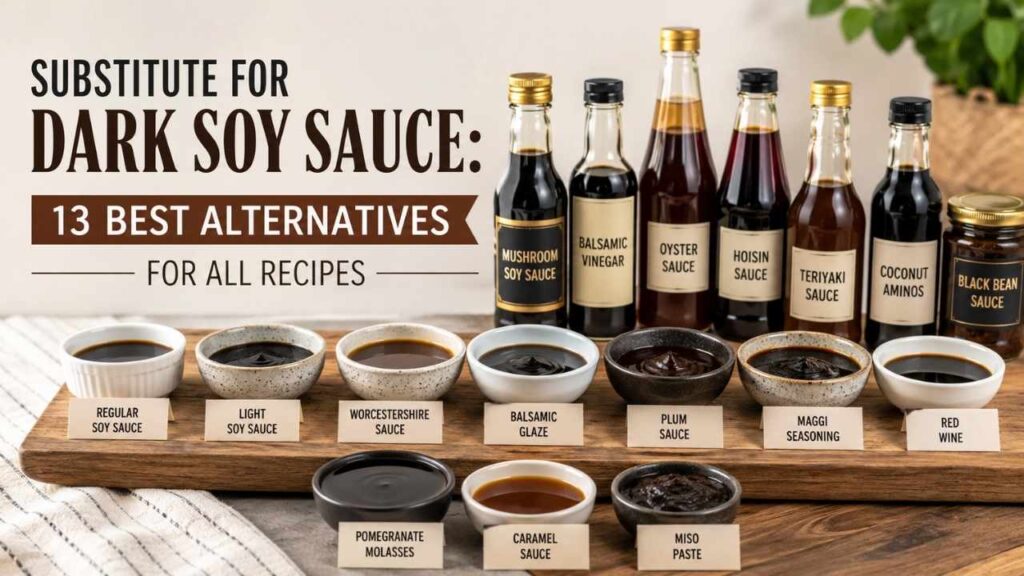

Running out of dark soy sauce does not mean you need to stop cooking. Whether you are making fried rice, stir-fries, noodle dishes, or a flavorful marinade, several ingredients can work as an excellent substitute for dark soy sauce.
Dark soy sauce adds a rich color, mild sweetness, and deep umami flavor to many Asian recipes. However, you can easily replace it with pantry staples or store-bought alternatives when you need a quick solution. The best dark soy sauce substitute depends on the recipe, flavor profile, and dietary requirements.
For most dishes, a mixture of regular soy sauce and molasses creates the closest match. Other popular options include tamari, coconut aminos, hoisin sauce, and oyster sauce. Some alternatives work better for Chinese cooking, while others suit gluten-free, vegan, or low-sodium diets.
This guide covers the best substitute for dark soy sauce, exact substitution ratios, recipe-specific recommendations, and homemade alternatives so you can confidently finish any recipe.
Quick Answer
The best substitute for dark soy sauce is a mixture of regular soy sauce and molasses. This combination closely matches the dark color, mild sweetness, and rich umami flavor that dark soy sauce adds to recipes. To make it, mix 1 tablespoon of soy sauce with ½ teaspoon of molasses. Use this blend in stir-fries, fried rice, marinades, and noodle dishes.
If you do not have molasses, several other dark soy sauce alternatives can work. Tamari offers a similar savory flavor and is often a great gluten-free soy sauce substitute. Coconut aminos provide a slightly sweeter, soy-free option, while hoisin sauce and oyster sauce add richness to many Asian recipes.
The right replacement for dark soy sauce depends on your recipe. For color and sweetness, soy sauce and molasses work best. For dietary needs, choose tamari, coconut aminos, or another alternative that fits your preferences.
Dark Soy Sauce Substitute Comparison Chart
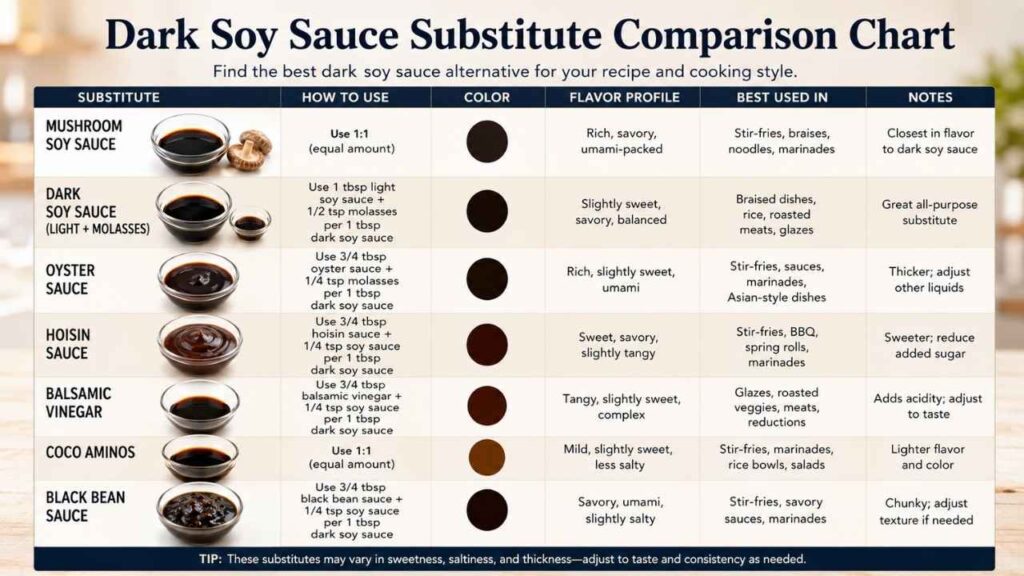
Before choosing a substitute for dark soy sauce, it helps to compare the most popular options. Some alternatives match the color, while others provide a similar flavor or sweetness. No single replacement works perfectly for every dish, so consider the recipe you are making.
| Substitute | Flavor Match | Color Match | Best Uses |
| Soy Sauce + Molasses | Excellent | Excellent | Fried rice, stir-fries |
| Tamari | Excellent | Good | Gluten-free dishes |
| Coconut Aminos | Good | Fair | Soy-free recipes |
| Hoisin Sauce | Good | Good | Marinades, sauces |
| Oyster Sauce | Good | Good | Stir-fries |
| Mushroom Soy Sauce | Excellent | Excellent | Asian cooking |
| Kecap Manis | Sweet | Excellent | Noodles, marinades |
| Worcestershire Sauce | Fair | Fair | Marinades |
When choosing a dark soy sauce substitute, focus on the flavor profile your dish needs. Some recipes require color, while others rely more on sweetness or savory depth.
You might also like: 9 Best Substitutes for Rice Vinegar
What Is Dark Soy Sauce?
Many people assume dark soy sauce and regular soy sauce are the same, but they serve different purposes in cooking. Dark soy sauce is a thicker, darker, and slightly sweeter version of traditional soy sauce. Manufacturers often age it longer and add molasses or caramelized sugar to create its deep color and rich taste.
In Chinese cuisine and other forms of Asian cooking, dark soy sauce mainly adds color and depth rather than intense saltiness. It gives dishes like fried rice, lo mein, chow mein, and braised meats their signature dark appearance.
Regular soy sauce usually tastes saltier and lighter, while dark soy sauce provides a more balanced combination of sweetness and umami flavor. Because of these differences, choosing the right dark soy sauce replacement can significantly affect the final taste and appearance of a dish.
How It Differs From Regular Soy Sauce
Although both products come from fermented soybeans, dark soy sauce differs from regular soy sauce in several important ways. The biggest difference is color. Dark soy sauce has a deep brown appearance that helps create the rich look found in many Asian dishes.
Dark soy sauce also contains a touch of sweetness. Manufacturers often add molasses, sugar, or caramelized ingredients during production. This gives it a smoother and less salty taste than regular soy sauce.
Another difference is texture. Dark soy sauce is usually slightly thicker, which helps it coat ingredients more effectively in stir-fries and marinades. Regular soy sauce works well for seasoning, while dark soy sauce often focuses on appearance and depth.
Understanding these differences helps you choose the closest alternative to dark soy sauce when you run out or need a dietary-friendly replacement.
Why Recipes Use Dark Soy Sauce
Recipes use dark soy sauce for more than flavor alone. One of its main functions is adding a rich, appetizing color to food. Many classic Chinese recipes, noodle dishes, and braised meals rely on dark soy sauce to achieve their traditional appearance.
Dark soy sauce also contributes a balanced combination of sweetness and savory flavor. It enhances meats, vegetables, and noodles without making them overly salty. This balance makes it a valuable ingredient in many marinades and cooking sauces.
In dishes like fried rice, beef stir-fry, and lo mein, dark soy sauce creates visual appeal while boosting flavor complexity. If you need a substitute for dark soy sauce in stir-fry or noodles, choose an option that can provide both color and depth. A blend of soy sauce and molasses usually delivers the closest results.
You might also like: 11 Best Substitutes for Sweet Chili Sauce
13 Best Substitutes for Dark Soy Sauce
Soy Sauce and Molasses (Best Overall)
If you need the closest substitute for dark soy sauce, combine regular soy sauce with molasses. This simple mixture mimics the dark color, slight sweetness, and savory flavor that dark soy sauce provides. Mix 1 tablespoon soy sauce with ½ teaspoon molasses and stir until smooth.
This option works exceptionally well in fried rice, stir-fries, marinades, and braised dishes. The soy sauce supplies the salty umami flavor, while the molasses recreates the rich sweetness and dark appearance. Most home cooks already have these ingredients available, making this one of the easiest solutions when cooking.
Unlike many alternatives, this mixture closely resembles authentic dark soy sauce in both flavor and appearance. If your recipe depends heavily on color and depth, this remains the most reliable dark soy sauce replacement for everyday cooking.
Regular Soy Sauce
Regular soy sauce is one of the most common substitutes because it is widely available and easy to use. Although it lacks the deep color and sweetness of dark soy sauce, it still delivers a strong savory flavor and rich umami notes.
You can replace dark soy sauce with an equal amount of regular soy sauce in many recipes. However, the finished dish may appear lighter and slightly saltier. To improve the match, add a small amount of brown sugar or molasses.
This option works best in recipes where flavor matters more than appearance. It performs well in marinades, dipping sauces, and quick stir-fries. If you are looking for an immediate substitute for dark soy sauce in a pinch, regular soy sauce is often the easiest choice because it requires no special preparation.
Tamari
Tamari is a Japanese soy-based sauce that offers a rich flavor profile similar to soy sauce. Many people prefer tamari because it contains little or no wheat, making it a popular gluten-free substitute for dark soy sauce.
Tamari delivers excellent umami flavor and works well in stir-fries, noodles, marinades, and dipping sauces. While it does not provide the same sweetness or dark color as dark soy sauce, adding a small amount of molasses can improve the resemblance.
Because of its smooth flavor and lower saltiness, tamari blends easily into many Asian recipes. It is especially useful for people following a gluten-free diet who still want a flavorful alternative. When combined with a sweetener, tamari becomes one of the best dark soy sauce alternatives available.
Coconut Aminos
Coconut aminos offer a popular soy-free substitute for dark soy sauce. Manufacturers create it from fermented coconut sap, producing a slightly sweet and savory seasoning.
Compared to soy sauce, coconut aminos contain less sodium and a milder flavor. This makes it a great choice for people seeking a low-sodium substitute for dark soy sauce. Although it lacks the intense dark color, it works well in marinades, sauces, and vegetable stir-fries.
Because coconut aminos naturally taste sweeter, they can mimic some of the sweetness found in dark soy sauce. However, the flavor remains lighter overall. For the best results, combine it with a small amount of molasses or brown sugar. This simple adjustment improves both color and depth while keeping the recipe soy-free.
Hoisin Sauce
Hoisin sauce can work surprisingly well when you need a flavorful alternative to dark soy sauce. It has a thick texture, dark appearance, and sweet-savory taste that complements many Asian dishes.
Because hoisin sauce contains additional ingredients such as garlic and spices, the flavor differs from traditional dark soy sauce. However, it performs exceptionally well in marinades, noodle dishes, and stir-fry sauces.
Use hoisin sauce in smaller amounts because its sweetness is stronger than dark soy sauce. Many cooks combine hoisin sauce with regular soy sauce to create a more balanced substitute. This combination delivers both sweetness and umami while maintaining a rich color that works well in recipes such as lo mein and beef stir-fry.
Oyster Sauce
Oyster sauce provides a rich, savory flavor and thick texture that can replace dark soy sauce in many recipes. Although it has a distinct taste, it delivers the deep umami notes that many Asian dishes require.
This substitute works especially well in stir-fries, meat dishes, and vegetable recipes. Because oyster sauce is thicker and sweeter than soy sauce, you may need to dilute it slightly with water or regular soy sauce.
Many cooks use oyster sauce when preparing beef and broccoli, noodles, or braised dishes. While it does not perfectly replicate dark soy sauce, it creates a rich flavor profile that enhances many recipes. For non-vegan dishes, oyster sauce remains one of the most practical dark soy sauce replacements.
Mushroom Soy Sauce
Mushroom soy sauce closely resembles dark soy sauce in both appearance and flavor. Manufacturers infuse soy sauce with mushrooms, creating an earthy, savory taste with extra depth.
This substitute works particularly well in stir-fries, noodles, soups, and braised dishes. The dark color helps maintain the appearance that many recipes require, while the mushrooms contribute additional umami flavor.
Because mushroom soy sauce shares many characteristics with dark soy sauce, it often requires no adjustments. Simply replace dark soy sauce using a 1:1 ratio. Many cooks consider this one of the most authentic alternatives available for traditional Asian cooking.
Kecap Manis
Kecap Manis, often called sweet soy sauce, comes from Indonesia and contains a high concentration of sugar. It has a thick consistency, dark appearance, and rich sweetness.
This ingredient works well as a substitute for dark soy sauce in noodles, fried rice, and marinades. However, because it tastes sweeter than dark soy sauce, you may need to reduce other sweet ingredients in the recipe.
Kecap Manis adds beautiful color and depth to food while maintaining a pleasant balance between sweetness and umami. It works particularly well in dishes where caramelized flavors enhance the overall taste.
Worcestershire Sauce
Although not traditionally used in Asian cooking, Worcestershire sauce can serve as an emergency substitute. It contains fermented ingredients that provide a savory, complex flavor profile.
Because Worcestershire sauce lacks the dark color and sweetness of dark soy sauce, it works best in marinades rather than noodle dishes or fried rice. You can improve the match by adding a small amount of brown sugar.
This option is not the closest replacement, but it can still add depth and richness when other alternatives are unavailable.
Black Bean Sauce
Black bean sauce offers a bold, savory flavor that works well in many Chinese-inspired dishes. Made from fermented black beans, it provides strong umami characteristics similar to dark soy sauce.
Because the flavor is more intense, use smaller amounts at first and adjust gradually. This sauce performs particularly well in beef dishes, stir-fries, and vegetable recipes.
Although it does not perfectly mimic dark soy sauce, it delivers the savory depth many recipes need while adding its own unique character.
Teriyaki Sauce
Teriyaki sauce combines soy sauce, sugar, and seasonings to create a sweet and savory glaze. This makes it a reasonable substitute when you need both sweetness and flavor.
Teriyaki sauce works best in marinades and grilled dishes. Because it contains additional ingredients, it may slightly change the overall taste of the recipe.
When using teriyaki sauce as a replacement, reduce other sweeteners in the dish to maintain balance.
Light Soy Sauce
Light soy sauce can replace dark soy sauce in many situations, especially when flavor matters more than appearance. It provides the same salty, savory base but lacks the rich color and sweetness.
To improve the match, combine light soy sauce with molasses, brown sugar, or a small amount of caramelized sugar. This adjustment helps recreate the flavor profile of dark soy sauce.
Light soy sauce works best in stir-fries, marinades, and dipping sauces where visual presentation is less important.
Homemade Dark Soy Sauce Blend
A homemade blend allows you to create a close approximation of dark soy sauce using pantry ingredients. Mix:
- 1 tablespoon soy sauce
- ½ teaspoon molasses
- Pinch of brown sugar
Stir until fully combined. This mixture delivers the dark color, sweetness, and savory depth that most recipes require.
Because you control the ingredients, you can easily adjust sweetness, sodium levels, and flavor intensity. This homemade option remains one of the most versatile solutions for anyone who regularly cooks Asian-inspired meals.
Best Dark Soy Sauce Substitute by Recipe Type
Not every dark soy sauce substitute works equally well in every recipe. Some alternatives excel in noodle dishes, while others perform better in marinades or stir-fries. Choosing the right replacement can help preserve both flavor and appearance.
Fried Rice
For fried rice, the best substitute is soy sauce and molasses. This combination provides the dark color and savory sweetness that fried rice recipes often require. Mushroom soy sauce is another excellent option because it closely matches the appearance and umami flavor of dark soy sauce.
Stir-Fries
If you need a substitute for dark soy sauce in stir-fry, use soy sauce and molasses, tamari, or oyster sauce. These options add depth and richness without overpowering the other ingredients.
Noodle Dishes
For lo mein, chow mein, and other noodle recipes, kecap manis, mushroom soy sauce, and hoisin sauce work particularly well. They provide color, sweetness, and a satisfying savory taste.
Ramen
The best substitute for dark soy sauce in ramen is tamari or mushroom soy sauce. Both add deep umami flavor while maintaining the balance of the broth.
Marinades
For marinades, use regular soy sauce, coconut aminos, or teriyaki sauce. These alternatives blend easily with other ingredients and enhance meats, poultry, and vegetables.
Braised Dishes
Braised dishes rely heavily on color and depth. Soy sauce and molasses, mushroom soy sauce, and oyster sauce create the best results because they closely mimic the richness of dark soy sauce.
Dipping Sauces
For dipping sauces, tamari, light soy sauce, and coconut aminos provide excellent flavor while keeping the sauce balanced and easy to customize.
How to Make a Dark Soy Sauce Substitute at Home
If you do not have dark soy sauce in your pantry, you can make a simple homemade version using ingredients you likely already own. A homemade dark soy sauce substitute works well for most recipes and takes only a few minutes to prepare.
2-Ingredient Version
Mix:
- 1 tablespoon regular soy sauce
- ½ teaspoon molasses
This simple blend creates a flavor and appearance similar to authentic dark soy sauce.
Authentic Homemade Version
For a richer substitute, combine:
- 2 tablespoons soy sauce
- 1 teaspoon molasses
- ¼ teaspoon brown sugar
This version delivers deeper sweetness and a darker color.
Pantry-Friendly Version
If you do not have molasses, mix:
- 1 tablespoon soy sauce
- ½ teaspoon brown sugar
While not identical, this blend still provides a practical replacement for dark soy sauce in many recipes.
Homemade substitutes give you complete control over sweetness, sodium levels, and flavor intensity, making them a convenient option for everyday cooking.
Dark Soy Sauce Substitute Conversion Chart
Using the correct amount of substitute helps maintain the balance of your recipe. The chart below makes it easier to replace dark soy sauce without guessing.
| Dark Soy Sauce Needed | Substitute |
| 1 teaspoon | 1 tsp soy sauce + tiny drop of molasses |
| 1 tablespoon | 1 tbsp soy sauce + ½ tsp molasses |
| 2 tablespoons | 2 tbsp soy sauce + 1 tsp molasses |
| ¼ cup | ¼ cup soy sauce + 2 tsp molasses |
| ½ cup | ½ cup soy sauce + 1 tbsp molasses |
For substitutes such as tamari, mushroom soy sauce, and coconut aminos, you can usually use a 1:1 ratio.
Always taste the dish as you cook. Some alternatives contain more sweetness, while others may be saltier than traditional dark soy sauce. Small adjustments can help you achieve the best final result.
Gluten-Free, Vegan, and Low-Sodium Alternatives
Many people need a dark soy sauce alternative that fits specific dietary requirements. Fortunately, several options work well while still providing excellent flavor.
Best Gluten-Free Options
Tamari remains one of the best gluten-free substitutes for dark soy sauce because it offers a similar umami flavor without wheat. Some brands also produce gluten-free soy sauces specifically designed for dietary restrictions.
Best Vegan Options
For a vegan dark soy sauce substitute, choose:
- Tamari
- Coconut aminos
- Soy sauce and molasses
- Mushroom soy sauce
These alternatives contain no animal-based ingredients while still delivering rich flavor.
Best Soy-Free Options
If you need a soy-free substitute for dark soy sauce, coconut aminos is the clear winner. It provides sweetness and savory notes without using soybeans.
Best Low-Sodium Options
People looking for a low-sodium substitute for dark soy sauce should consider coconut aminos or reduced-sodium tamari. These options contain less salt while maintaining a satisfying taste.
Common Mistakes When Replacing Dark Soy Sauce
Choosing the wrong substitute can affect the flavor, color, and texture of your dish. Avoid these common mistakes when selecting a dark soy sauce replacement.
Using Regular Soy Sauce Without Adjustments
Many cooks use regular soy sauce alone and wonder why the dish tastes different. Dark soy sauce contains more sweetness and color, so adding molasses or brown sugar often creates a better match.
Ignoring Sweetness Levels
Some substitutes, such as kecap manis and hoisin sauce, are naturally sweeter. Using them without adjusting other ingredients may make the dish overly sweet.
Adding Too Much Salt
Regular soy sauce often contains more sodium than dark soy sauce. Taste as you cook and reduce other salty ingredients if necessary.
Choosing the Wrong Substitute for the Recipe
A substitute that works well in a marinade may not work in fried rice or noodles. Always choose an alternative based on the specific needs of the recipe.
FAQs
Can I Use Regular Soy Sauce Instead of Dark Soy Sauce?
Yes. Regular soy sauce works as a substitute, but the dish may be lighter in color and slightly saltier. Adding molasses creates a closer match.
Is Tamari the Same as Dark Soy Sauce?
No. Tamari and dark soy sauce have different production methods, but tamari provides a similar savory flavor and works well as a substitute.
Is Dark Soy Sauce Gluten-Free?
Most dark soy sauces contain wheat and are not gluten-free. Tamari is often the better option for people avoiding gluten.
Can I Make Dark Soy Sauce at Home?
Yes. A mixture of soy sauce and molasses creates a simple homemade substitute that closely resembles dark soy sauce.
Which Substitute Tastes Closest?
The combination of soy sauce and molasses offers the closest match in both flavor and appearance.
What Is the Best Substitute for Fried Rice?
For fried rice, use soy sauce and molasses or mushroom soy sauce. Both provide the dark color and rich flavor commonly found in traditional recipes.
Conclusion
The best substitute for dark soy sauce depends on your recipe and dietary needs. For most situations, soy sauce and molasses remains the closest replacement because it mimics the color, sweetness, and umami flavor of authentic dark soy sauce.
If you need a gluten-free alternative, choose tamari. For a soy-free option, coconut aminos works exceptionally well. When preparing noodle dishes and stir-fries, mushroom soy sauce and kecap manis can also deliver excellent results.
No substitute perfectly duplicates dark soy sauce, but several alternatives come remarkably close. By choosing the right replacement and using the correct ratio, you can successfully prepare fried rice, noodles, marinades, braised dishes, and many other Asian-inspired recipes without sacrificing flavor.