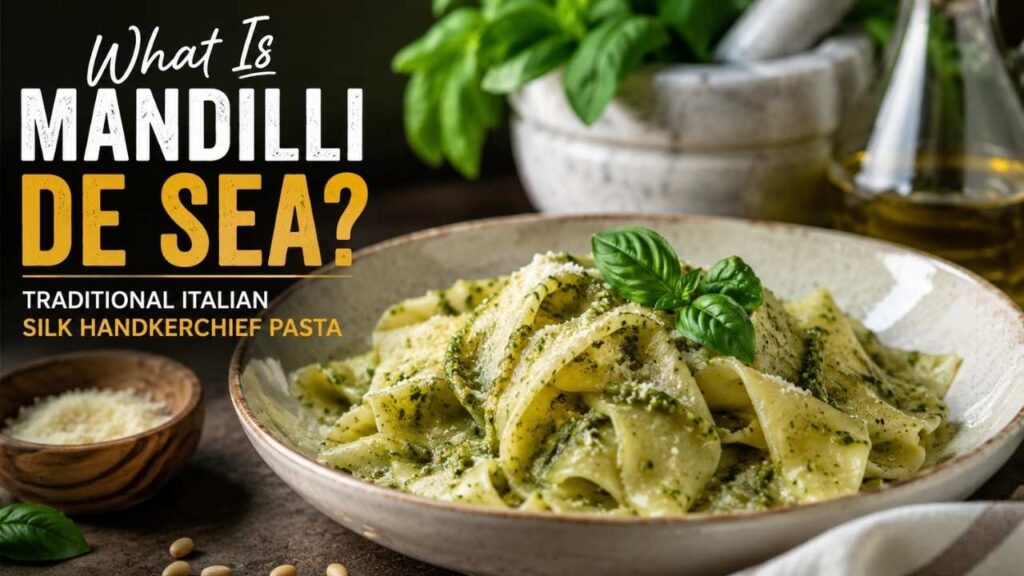

If you’ve ever explored the world of regional Italian food, you’ve probably come across some unique pasta shapes. One of the most fascinating is Mandilli De Sea, a delicate Ligurian pasta often called Silk Handkerchief Pasta. While it may not be as famous as spaghetti or lasagna, this traditional dish has a long history and a special place in Italian cuisine.
What makes Mandilli De Sea pasta so unique is its appearance. The pasta consists of large, thin sheets that look like folded silk handkerchiefs when served. These delicate sheets pair beautifully with Pesto alla Genovese, the iconic basil-based sauce from Genoa.
In this guide, you’ll learn what Mandilli De Sea is, where it comes from, what its name means, how it differs from other pasta varieties, and how you can make it at home. Whether you’re a pasta lover or simply curious about traditional Ligurian cuisine, this guide will help you understand why this dish continues to impress food lovers around the world.
What Is Mandilli De Sea?
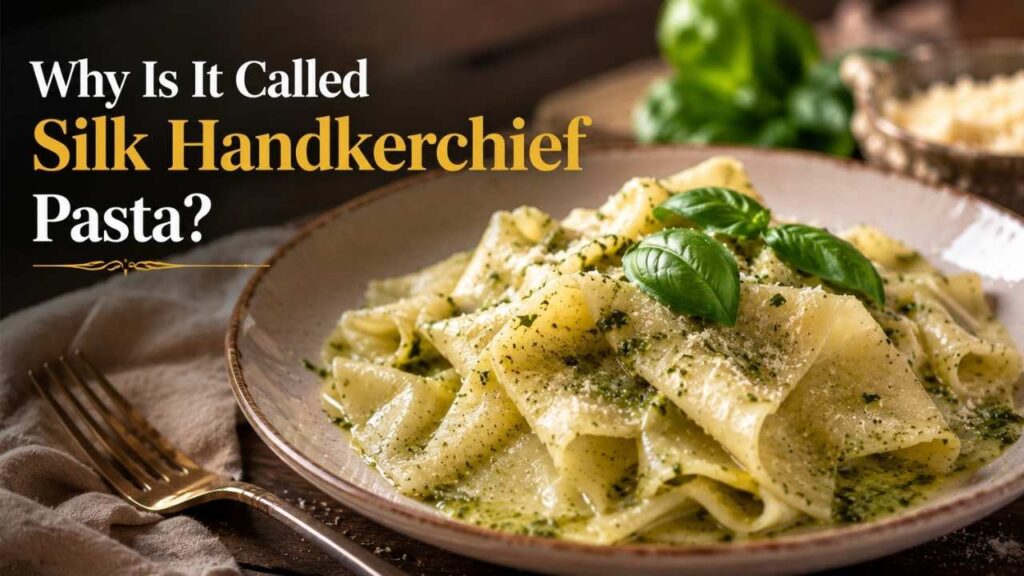
Mandilli De Sea is a traditional Italian silk handkerchief pasta from the coastal region of Liguria. It consists of large, paper-thin sheets of fresh egg pasta that become soft and silky after cooking.
Unlike stuffed pasta or ribbon-shaped noodles, this handmade pasta focuses on simplicity. The sheets are usually cut into large squares and served with light sauces that allow the pasta’s texture to shine.
The most famous version is Mandilli De Sea al Pesto, which combines the pasta with Pesto Genovese, a sauce made from basil, pine nuts, olive oil, garlic, and cheese. The thin pasta absorbs the sauce beautifully, creating a rich yet balanced dish.
Many people compare Mandilli De Sea to lasagna sheets because of its shape. However, the texture, serving style, and culinary purpose are completely different. This pasta is designed to be enjoyed fresh, not layered and baked.
Why Is It Called Silk Handkerchief Pasta?
The name Mandilli De Sea comes from the Ligurian dialect.
- Mandilli means handkerchiefs.
- Sea or Saea means silk.
Together, the phrase translates to “Silk Handkerchiefs.”
The name perfectly describes the pasta’s appearance. Once cooked, the thin sheets become soft, flexible, and slightly folded, much like a delicate silk handkerchief resting on a plate.
This descriptive name has become one of the reasons the dish attracts attention. It reflects both the pasta’s appearance and the craftsmanship required to make it properly.
Traditional cooks roll the dough extremely thin before cutting it into large squares. This process creates the silky texture that gives the pasta its famous name.
The History of Mandilli De Sea
Like many regional dishes, Mandilli De Sea has deep roots in local tradition.
The pasta originated in Liguria, a region famous for its coastal villages, olive groves, and fresh ingredients. Families throughout Liguria have prepared handmade pasta for generations, often using simple ingredients such as flour and eggs.
Over time, cooks developed a pasta style that emphasized thinness and elegance rather than thickness and heaviness. This led to the creation of Mandilli de Saea, one of the region’s most distinctive pasta specialties.
The dish eventually became linked with Pesto alla Genovese, which also originated in Liguria. Since both the pasta and pesto come from the same region, they naturally evolved into one of Italy’s most celebrated pairings.
Today, food historians view Mandilli De Sea as an important example of Italian culinary heritage and traditional Ligurian food culture.
Where Does Mandilli De Sea Come From?
Mandilli De Sea comes from Liguria, a narrow coastal region in northwestern Italy.
Liguria is known for:
- Genoa
- Pesto Genovese
- Focaccia
- Olive oil
- Handmade pasta traditions
The region’s cooking style focuses on fresh ingredients and simple preparations. Instead of heavy sauces, many Ligurian dishes highlight natural flavors.
Because of this culinary philosophy, Silk Handkerchief Pasta became a perfect fit. Its delicate texture complements fresh herbs, olive oil, and pesto without overpowering them.
Today, many visitors travel to Genoa and other Ligurian towns to experience authentic Mandilli De Sea pasta prepared using traditional methods.
What Makes Mandilli De Sea Different From Other Pasta?
At first glance, Mandilli De Sea may look similar to other fresh pasta sheets, but several characteristics set it apart.
Mandilli De Sea vs Lasagna
Many people ask, “Is Mandilli De Sea the same as lasagna?”
The answer is no.
Lasagna sheets are thicker and designed for layered baked dishes. Mandilli De Sea, on the other hand, is much thinner and is usually served immediately after boiling.
Mandilli De Sea vs Fazzoletti
Both pasta types resemble handkerchiefs, but Mandilli De Sea has a stronger connection to Ligurian cuisine and traditional pesto-based dishes.
Mandilli De Sea vs Pappardelle
Pappardelle features long ribbons, while Mandilli De Sea pasta uses large square sheets. The eating experience is also lighter and more delicate.
These differences help make Mandilli De Sea one of the most unique Italian pasta varieties.
Characteristics of Authentic Mandilli De Sea
Authentic Mandilli De Sea has several defining features.
Paper-Thin Texture
The dough is rolled until it becomes extremely thin. Some sheets are nearly translucent.
Large Square Shape
Traditional cooks cut the pasta into broad squares that resemble handkerchiefs.
Fresh Egg Pasta Dough
Most recipes use:
- 00 flour
- Eggs
- Water (if needed)
Delicate Appearance
After cooking, the sheets fold naturally and develop a silky texture.
These qualities create the signature look and feel that make Silk Handkerchief Pasta so memorable.
Traditional Sauces Served With Mandilli De Sea
Although many sauces work well with this pasta, several options remain traditional favorites.
Pesto Alla Genovese
This is the most famous choice.
Authentic pesto includes:
- Fresh basil
- Pine nuts
- Garlic
- Olive oil
- Parmigiano Reggiano
- Pecorino Romano
Walnut Sauce
A classic Ligurian sauce made with walnuts, bread, milk, and cheese.
Sugo Finto
A slow-cooked sauce that delivers rich flavor without relying heavily on meat.
Butter and Sage
A simple option that highlights the pasta’s delicate texture.
How To Make Mandilli De Sea at Home
Making homemade Mandilli De Sea requires patience but very few ingredients.
Ingredients
- 2 cups 00 flour
- 3 large eggs
- Pinch of salt
Step 1: Make the Dough
Place the flour on a clean surface and create a well in the center. Add the eggs and mix until a dough forms.
Step 2: Knead
Knead for about 10 minutes until smooth and elastic.
Step 3: Rest the Dough
Cover and let it rest for 30 minutes.
Step 4: Roll the Dough
Use a pasta machine or rolling pin to create extremely thin sheets.
Step 5: Cut the Pasta
Cut into large square handkerchief-like pieces.
Step 6: Cook
Boil in salted water for 2–3 minutes.
Serve immediately with Pesto Genovese or your favorite sauce.
Expert Tips for Perfect Silk Handkerchief Pasta
If you’re making Mandilli De Sea for the first time, these tips can help.
- Use high-quality 00 flour.
- Roll the dough as thin as possible.
- Avoid overcooking.
- Reserve pasta water for the sauce.
- Serve immediately after cooking.
- Use fresh basil when making pesto.
- Don’t overload the pasta with heavy sauces.
Small details often make a big difference when preparing traditional Italian pasta.
Nutritional Information
The exact nutrition depends on ingredients and serving size, but a typical serving contains:
| Nutrient | Approximate Amount |
| Calories | 280–350 |
| Carbohydrates | 45–55g |
| Protein | 10–14g |
| Fat | 6–10g |
Adding pesto will increase the fat and calorie content because of the olive oil, cheese, and pine nuts.
Can You Store or Freeze Mandilli De Sea?
Yes.
Refrigeration
Fresh pasta can stay in the refrigerator for up to 24 hours before cooking.
Freezing
Place the sheets on a baking tray until frozen, then transfer them to freezer bags.
Reheating
Cook directly from frozen or reheat gently with sauce.
Proper storage helps preserve the delicate texture of the pasta.
FAQs
What is Mandilli De Sea?
It is a traditional Ligurian pasta made from thin sheets of fresh egg pasta that resemble silk handkerchiefs.
What does Mandilli De Sea mean?
The name translates to “Silk Handkerchiefs” in the Ligurian dialect.
Is Mandilli De Sea the same as lasagna?
No. It is thinner, lighter, and typically served with sauce rather than baked.
What sauce goes best with Mandilli De Sea?
Pesto alla Genovese remains the most traditional and popular choice.
Can I make Mandilli De Sea without eggs?
Some variations exist, but authentic recipes typically use eggs.
Conclusion
Mandilli De Sea is much more than a beautiful pasta shape. It represents centuries of Ligurian culinary tradition, expert craftsmanship, and the simple elegance that defines great Italian cooking.
Its paper-thin texture, rich history, and connection to Pesto Genovese make it one of Italy’s most distinctive regional dishes.
Whether you want to learn about Silk Handkerchief Pasta, explore traditional Ligurian cuisine, or try making homemade pasta from scratch, Mandilli De Sea offers a delicious way to experience the authentic flavors of Italy.