
Running out of potato starch doesn’t mean your recipe is ruined. Many common pantry ingredients can work just as well, whether you’re thickening soups, sauces, and gravy or making a crispy coating for fried foods.
The key is choosing the right Potato Starch Substitutes for your recipe. Some alternatives perform better in baking, while others are ideal for frying or creating smooth, glossy sauces.
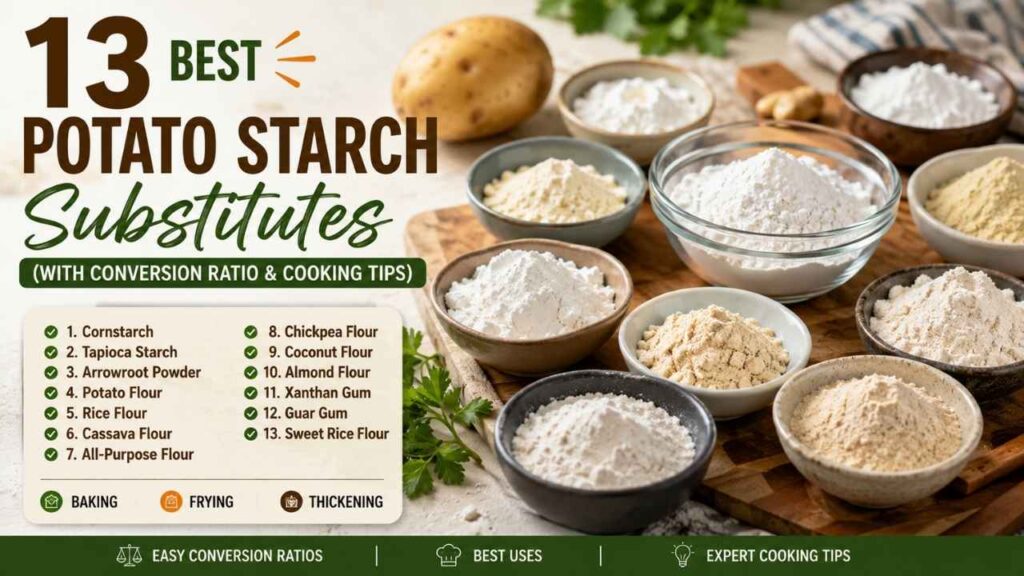
In this guide, you’ll learn about the 13 best potato starch substitutes, their conversion ratios, and the best ways to use each one. Whether you need a gluten-free substitute for potato starch or simply want to know what can I use instead of potato starch, you’ll find practical, easy-to-follow answers here.
Quick Answer
If you need a quick substitute for potato starch, cornstarch is the best overall choice. It thickens soups, sauces, and gravies well and also creates a crispy coating for fried foods. For gluten-free baking, tapioca starch is one of the closest replacements because it gives baked goods a soft, chewy texture.
Arrowroot powder is perfect for clear sauces and fruit fillings, while rice flour works well for light frying. If you’re baking bread, potato flour can also be a good option. The best potato starch substitute depends on your recipe, so choosing the right replacement helps you keep the flavor, texture, and consistency as close as possible to the original dish.
Potato Starch Substitute Comparison Table
Before choosing a potato starch replacement, compare the most popular options below. This table makes it easy to find the best substitute based on your cooking needs.
| Substitute | Best For | Ratio | Gluten-Free | Baking | Frying |
| Cornstarch | Thickening, frying | 1:1 | ✅ | ✅ | ✅ |
| Tapioca Starch | Baking, desserts | 2:1 | ✅ | ✅ | Good |
| Arrowroot Powder | Sauces, pie fillings | 1:1 | ✅ | Good | Fair |
| Potato Flour | Bread, rolls | Slightly less | ✅ | ✅ | Fair |
| Rice Flour | Frying | 1:1 | ✅ | Good | ✅ |
| Cassava Flour | Gluten-free baking | 1:1 | ✅ | ✅ | Good |
| All-Purpose Flour | Thickening | 2:1 | ❌ | Good | Fair |
| Chickpea Flour | Savory recipes | 1:1 | ✅ | Good | Fair |
| Coconut Flour | Sweet baking | ¼–⅓:1 | ✅ | Good | ❌ |
| Almond Flour | Low-carb baking | Varies | ✅ | Good | ❌ |
What Does Potato Starch Do in Recipes?
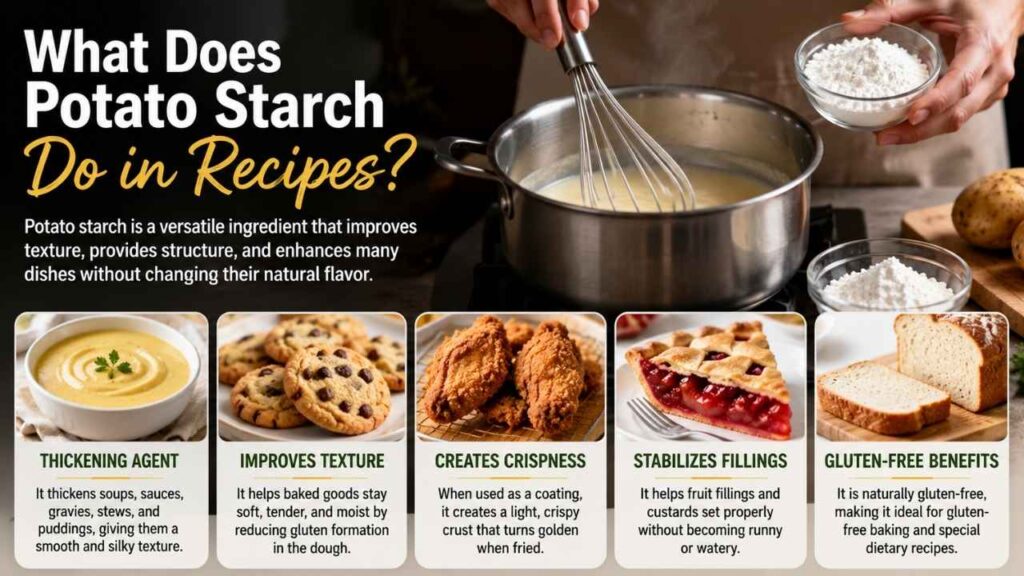
Understanding how potato starch works makes it easier to pick the right substitute. It acts as a thickening agent, giving soups, stews, gravies, and sauces a smooth texture without changing the flavor. In baking, potato starch helps cakes, cookies, and bread stay soft by holding moisture. It also improves the texture of many gluten-free recipes.
When used for frying, potato starch creates a light, crispy coating that turns golden without becoming heavy. Because it has a neutral taste, it blends easily into both sweet and savory dishes. Choosing a substitute with similar qualities will help you achieve the best results, whether you’re baking, thickening a sauce, or frying your favorite foods.
13 Best Potato Starch Substitutes
1. Cornstarch
Cornstarch is the best substitute for potato starch because it works in almost every recipe. It thickens soups, gravies, stews, and sauces quickly while keeping the flavor neutral. It is also a great choice for fried chicken, vegetables, and other fried foods because it creates a crispy, golden coating.
Use a 1:1 substitution ratio, replacing one tablespoon of potato starch with one tablespoon of cornstarch. Although it performs well in most recipes, long cooking times can slightly reduce its thickening power. If you’re wondering, “Can I use cornstarch instead of potato starch?” the answer is yes. For most everyday cooking and baking, cornstarch is the easiest and most reliable potato starch replacement.
2. Tapioca Starch
Tapioca starch, sometimes called tapioca flour, is one of the best gluten-free substitutes for potato starch. It works especially well in bread, cookies, cakes, and other baked goods because it creates a soft, chewy texture. It also thickens pie fillings, puddings, and sauces while giving them a smooth finish.
Since tapioca starch is lighter than potato starch, use about 2 tablespoons of tapioca starch for every 1 tablespoon of potato starch. It freezes well, making it a smart choice for desserts and make-ahead recipes. If you need a potato starch substitute for baking, tapioca starch is one of the closest alternatives and delivers excellent results in many gluten-free recipes.
3. Arrowroot Powder
Arrowroot powder is another excellent potato starch substitute, especially for recipes that need a clear, glossy finish. It works well in gravies, sauces, soups, and pie fillings because it thickens without becoming cloudy. Arrowroot has a mild flavor, so it won’t change the taste of your dish.
Replace potato starch with arrowroot using a 1:1 ratio for most recipes. It performs best over low to medium heat, as very high temperatures can reduce its thickening ability. If you’re looking for a gluten-free substitute for potato starch that works well in delicate recipes, arrowroot powder is a dependable choice. It is also a great option for fruit desserts and homemade fillings.
4. Potato Flour
Many people think potato flour and potato starch are the same, but they are very different. Potato flour is made from whole cooked potatoes, so it has more flavor and absorbs more moisture. It works best in bread, rolls, pizza dough, and other baked goods where extra moisture is helpful.
When using potato flour as a potato starch replacement, start with slightly less than the recipe calls for because it thickens differently. It is also gluten-free, making it suitable for many special diets. However, potato flour is not the best choice for clear sauces or gravies, as it can change both the texture and color of the finished dish.
5. Rice Flour
Rice flour is an affordable and easy-to-find substitute for potato starch, especially if you’re making fried foods. It creates a light, crispy coating for chicken, seafood, vegetables, and other fried recipes. Rice flour can also thicken soups, sauces, and gravies, although it is slightly less powerful than potato starch. Use it in a 1:1 ratio in most recipes.
Because it is naturally gluten-free, rice flour is a popular choice for people with gluten sensitivities. If you’re searching for the best potato starch substitute for frying, rice flour is one of the top options. It delivers excellent crispiness while keeping the flavor light and letting the main ingredients shine.
6. Cassava Flour
Cassava flour is a versatile potato starch substitute that works well in both cooking and baking. Unlike tapioca starch, it is made from the whole cassava root, so it contains more fiber and creates a slightly heavier texture. It is an excellent choice for gluten-free bread, cookies, cakes, and pizza dough because it helps hold ingredients together.
You can also use it to thicken soups, stews, and sauces. In most recipes, use a 1:1 substitution ratio. If you need a gluten-free substitute for potato starch that works in many different recipes, cassava flour is a dependable option. It produces soft baked goods while adding structure and moisture without changing the overall flavor too much.
7. All-Purpose Flour
If you don’t need a gluten-free substitute, all-purpose flour can replace potato starch in many everyday recipes. It works best for thickening soups, gravies, stews, and creamy sauces. Because it contains gluten, it gives food a different texture than potato starch and may make sauces look slightly less clear.
It also needs a few extra minutes of cooking to remove the raw flour taste. Use about 2 tablespoons of all-purpose flour for every 1 tablespoon of potato starch. While it is not the best option for crispy frying or gluten-free baking, it is an easy and affordable potato starch replacement when you need a simple thickener from your pantry.
8. Chickpea Flour
Chickpea flour is a healthy substitute for potato starch that adds protein and fiber to your meals. It has a mild, nutty flavor that pairs well with savory dishes such as soups, sauces, flatbreads, and vegetable fritters. It also works as a binding agent in veggie burgers and similar recipes.
Use a 1:1 replacement ratio, but remember that its flavor is stronger than potato starch. Chickpea flour is naturally gluten-free, making it a good choice for special diets. It thickens well but creates a denser texture, so it is better for hearty recipes than light desserts. If you want a more nutritious potato starch substitute, chickpea flour is a great option to keep on hand.
9. Coconut Flour
Coconut flour works best in sweet baked goods rather than savory recipes. It absorbs much more liquid than potato starch, so you only need a small amount. Start with ¼ to ⅓ of the amount called for in the recipe and add extra liquid if needed. Coconut flour is ideal for cakes, cookies, muffins, and other desserts because it adds a light coconut flavor and plenty of fiber.
However, it is not a good choice for thickening soups, gravies, or sauces. If you are looking for a gluten-free potato starch replacement for baking, coconut flour can work well as long as you adjust the liquid and avoid using too much.
10. Almond Flour
Almond flour is a popular gluten-free substitute for potato starch in baking. It gives cakes, cookies, and muffins a rich flavor while keeping them soft and moist. Because almond flour does not have the same thickening power as potato starch, it should not be used for soups, gravies, or sauces.
It is also a favorite ingredient for keto-friendly and low-carb recipes. Since almond flour behaves differently, you may need to combine it with another starch when replacing potato starch in baking. If your goal is to make healthier baked treats without gluten, almond flour is an excellent choice that adds both flavor and nutrition.
11. Xanthan Gum
Xanthan gum is not a flour, but it can replace potato starch in certain recipes. It is mainly used in gluten-free baking because it improves texture and helps hold ingredients together. Unlike other substitutes, xanthan gum is very concentrated, so a little goes a long way. In most recipes, ¼ teaspoon is enough for binding, making it much more powerful than potato starch.
It is not the best choice for thickening large pots of soup, gravy, or sauce, but it works very well in bread, cakes, and cookies. If your recipe needs better structure instead of extra thickening, xanthan gum is a smart ingredient to use.
12. Guar Gum
Guar gum is another useful gluten-free substitute for potato starch. It improves texture, thickens liquids, and keeps ingredients from separating. It works well in gluten-free bread, sauces, salad dressings, and frozen desserts. Like xanthan gum, guar gum is highly concentrated, so start with ¼ teaspoon and only add more if needed. Using too much can make food sticky or gummy.
Although it is not commonly used for frying, it performs well in baking and thickening recipes. If you often prepare gluten-free meals, guar gum is a handy potato starch replacement that helps create smooth textures and consistent results without changing the flavor of your dishes.
13. Sweet Rice Flour
Sweet rice flour, also known as glutinous rice flour, is another useful potato starch substitute for baking. Despite its name, it is not sweet. It is made from sticky rice and gives baked goods a soft, chewy texture. It works well in cookies, cakes, muffins, and other gluten-free recipes where extra moisture and structure are important.
You can usually replace potato starch with sweet rice flour using a 1:1 ratio, although the final texture may be slightly denser. It is less effective for thickening soups or gravies because it becomes sticky when overcooked. For baking, however, it is a dependable alternative that helps improve texture and keeps baked goods tender.
Best Potato Starch Substitute by Cooking Method
The best potato starch substitute depends on what you’re cooking. Some alternatives work better for baking, while others are ideal for frying or thickening soups and sauces. Cornstarch is the top choice for everyday cooking because it thickens quickly and creates a crispy coating.
Tapioca starch is perfect for gluten-free baking, giving bread and cakes a soft, chewy texture. Arrowroot powder works best in clear sauces and fruit fillings because it leaves a glossy finish. If you’re frying chicken or vegetables, rice flour creates a light, crunchy coating.
Cassava flour is a versatile option for gluten-free recipes, while potato flour works best in bread and rolls where extra moisture improves the final texture.
| Recipe | Best Substitute |
| Baking | Tapioca Starch |
| Frying | Cornstarch or Rice Flour |
| Soups | Cornstarch |
| Sauces | Arrowroot Powder |
| Gravy | Cornstarch |
| Pie Filling | Arrowroot Powder |
| Gluten-Free Baking | Tapioca Starch or Cassava Flour |
| Air Fryer Recipes | Rice Flour |
| Fried Chicken | Cornstarch |
| Tempura | Rice Flour |
Potato Starch vs. Potato Flour
Although their names are similar, potato starch and potato flour are not interchangeable. Potato starch comes from the starch extracted from potatoes, while potato flour is made from whole cooked potatoes that are dried and ground into flour.
Potato starch has a neutral flavor and works mainly as a thickening agent for soups, gravies, sauces, and crispy coatings. Potato flour has a stronger potato flavor and absorbs more moisture, making it a better choice for bread, rolls, and other baked goods.
If you replace potato starch with potato flour, use slightly less because it behaves differently. Knowing the difference helps you choose the right ingredient and avoid changing the texture of your recipe.
| Potato Starch | Potato Flour |
| Neutral flavor | Mild potato flavor |
| Best for thickening | Best for baking |
| Light texture | Dense texture |
| Crispy frying | Moist bread |
| Extracted starch | Whole potato |
How to Choose the Right Potato Starch Substitute
Choosing the right potato starch substitute is easier when you think about your recipe first. If you need a thickening agent for soups, gravies, or sauces, cornstarch is usually the best option.
For gluten-free baking, choose tapioca starch or cassava flour because they create soft, tender baked goods. If your goal is a crispy coating, rice flour and cornstarch are excellent choices for frying.
Arrowroot powder is ideal for fruit fillings and clear sauces because it creates a smooth, glossy finish. Also consider any dietary needs. Gluten-free options include arrowroot, tapioca starch, rice flour, cassava flour, and potato flour. Matching the substitute to the recipe gives you the best texture and flavor.
Potato Starch Conversion Chart
Using the correct potato starch replacement ratio helps your recipe turn out as expected. Some substitutes have the same thickening strength, while others need more or less to achieve similar results. Use this quick chart as a guide whenever you need to replace potato starch in cooking or baking.
| Substitute | Replace 1 Tbsp Potato Starch With |
| Cornstarch | 1 Tbsp |
| Arrowroot Powder | 1 Tbsp |
| Rice Flour | 1 Tbsp |
| Cassava Flour | 1 Tbsp |
| Tapioca Starch | 2 Tbsp |
| All-Purpose Flour | 2 Tbsp |
| Potato Flour | Slightly less than 1 Tbsp |
| Coconut Flour | ¼–⅓ Tbsp |
| Xanthan Gum | ¼ tsp |
| Guar Gum | ¼ tsp |
| Sweet Rice Flour | 1 Tbsp |
Always start with these amounts, then adjust slightly if your recipe needs a thicker or thinner texture.
Common Mistakes When Replacing Potato Starch
Using the wrong substitute or the wrong amount can affect the final dish. One common mistake is ignoring the conversion ratio. For example, coconut flour absorbs much more liquid than potato starch, while tapioca starch often needs a larger amount.
Another mistake is choosing a substitute that doesn’t match the recipe. Potato flour works well in bread but can make clear sauces cloudy. Overusing xanthan gum or guar gum may create a sticky texture instead of a smooth one.
It’s also important to avoid overcooking delicate starches like arrowroot powder, which can lose some of its thickening power. Choosing the right substitute and using the correct ratio will help you achieve the best results every time.
FAQs
What is the best substitute for potato starch?
Cornstarch is the best all-purpose substitute because it works well for thickening, frying, and many baking recipes.
Can I use cornstarch instead of potato starch?
Yes. Replace potato starch with cornstarch using a 1:1 ratio in most recipes.
Is potato flour the same as potato starch?
No. Potato flour is made from whole potatoes, while potato starch is only the extracted starch. They have different uses and textures.
Which substitute is best for gluten-free baking?
Tapioca starch and cassava flour are two of the best choices because they improve texture without adding gluten.
Which substitute makes food crispy?
Cornstarch and rice flour create the crispiest coating for fried foods like chicken, seafood, and vegetables.
Conclusion
The best potato starch substitute depends on your recipe, but a few options stand out. Cornstarch is the best all-around replacement because it thickens soups, gravies, and sauces while also creating crispy fried foods.
Tapioca starch is the top choice for gluten-free baking, and arrowroot powder works perfectly in clear sauces and pie fillings. If you’re making fried foods, rice flour delivers a light, crunchy coating.
For bread and rolls, potato flour adds moisture and improves texture. Keep the potato starch conversion chart nearby, follow the recommended ratios, and choose the substitute that matches your recipe. With the right ingredient, you can enjoy delicious results even when potato starch isn’t available.