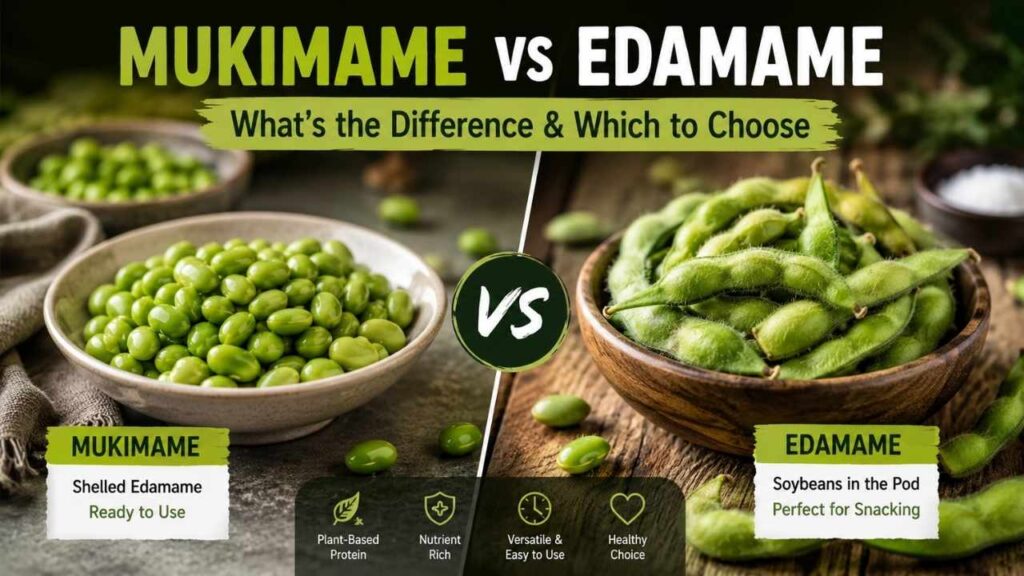

If you’ve ever spotted mukimame and edamame in the freezer aisle and wondered whether they’re the same thing, you’re not alone. Many people search for mukimame vs edamame because both products look similar, offer impressive nutrition, and come from the same soybean plant. However, despite their similarities, a few key differences can affect how you cook, serve, and enjoy them.
At first glance, the debate between edamame vs mukimame may seem confusing. After all, both are young soybeans harvested before they fully mature. Both provide plant-based protein, dietary fiber, healthy fats, and important nutrients that support a balanced diet. Yet one comes inside a pod, while the other arrives ready to use straight from the package.
So, is mukimame the same as edamame? The short answer is that mukimame is simply shelled edamame. However, understanding their differences in preparation, texture, convenience, and cooking applications can help you choose the right option for your meals.
In this complete guide, we’ll compare mukimame vs edamame nutrition, taste, texture, health benefits, and culinary uses. You’ll also learn whether you can substitute one for the other, which option works best for meal prep, and which may better fit your dietary goals. By the end, you’ll know exactly when to choose mukimame, when to choose edamame, and how to get the most out of these nutritious green soybeans.
Quick Answer
The main difference between mukimame vs edamame is simple: mukimame is shelled edamame, while edamame comes inside the pod. Both come from the same young soybeans harvested before they fully mature. They offer nearly identical nutrition, including plant-based protein, fiber, vitamins, and minerals.
If you enjoy snacking and don’t mind removing beans from pods, edamame is a great choice. If you want convenience for recipes like salads, grain bowls, soups, and stir-fries, mukimame may work better because the beans are already removed from the pod.
Although many people wonder, “Is mukimame the same as edamame?” the answer is yes and no. They come from the same soybean plant, but their preparation, convenience, and culinary uses differ. Understanding those differences can help you choose the best option for your cooking style and dietary needs.
Mukimame vs Edamame at a Glance
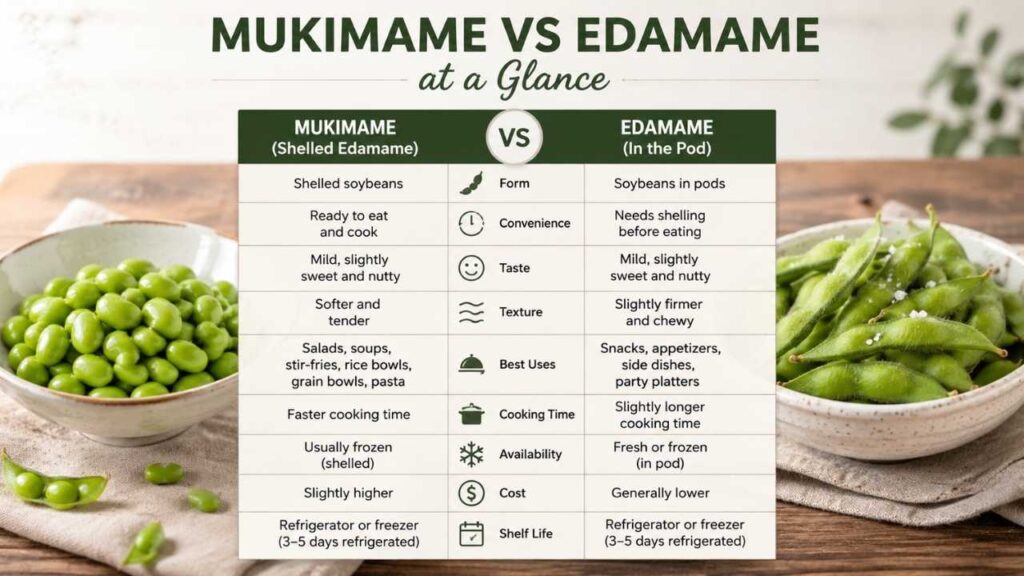
Before diving deeper into the details, it helps to compare these two foods side by side. Many shoppers notice both products in the freezer section and assume they are completely different vegetables. In reality, they come from the same source.
| Feature | Mukimame | Edamame |
| Form | Shelled soybeans | Soybeans in pods |
| Convenience | Ready to use | Requires shelling |
| Taste | Mild, slightly sweet | Mild, slightly sweet |
| Texture | Softer | Slightly firmer |
| Nutrition | Nearly identical | Nearly identical |
| Best Uses | Salads, soups, grain bowls | Snacks, appetizers |
| Cooking Time | Faster | Slightly longer |
| Storage | Usually frozen | Fresh or frozen |
When comparing edamame vs mukimame, the biggest difference is convenience. Since shelled edamame comes ready to eat, many home cooks prefer mukimame for quick meals and meal prep. However, many people enjoy the interactive eating experience that comes with traditional edamame pods.
What Is Edamame?
Edamame refers to immature soybeans harvested before they fully ripen. These bright green beans grow inside pods and play an important role in Japanese cuisine. Restaurants often serve steamed edamame as a healthy appetizer sprinkled with sea salt.
Unlike mature soybeans, edamame has a tender texture and a slightly sweet flavor. The pods are not edible. Instead, you squeeze the beans out before eating them. Because edamame contains protein, dietary fiber, healthy fats, and important nutrients, many people consider it a nutritious snack.
Today, frozen edamame is widely available in grocery stores. It fits well into vegan diets, vegetarian diets, and high-protein diets. Many people also add edamame to rice bowls, noodle dishes, and salads to increase protein content.
If you’ve ever wondered what makes edamame special, the answer lies in its freshness, nutritional value, and versatility in everyday cooking.
What Is Mukimame?
Mukimame is simply edamame without the pod. The word itself refers to shelled soybeans that have already been removed from their outer casing. Because the preparation step is already complete, mukimame offers a convenient option for busy cooks.
Many stores sell frozen mukimame alongside frozen vegetables and frozen edamame. Since the beans are already shelled, you can quickly add them to stir-fries, soups, salads, grain bowls, and meal prep recipes.
Nutritionally, mukimame provides nearly the same benefits as edamame. It contains plant-based protein, fiber, amino acids, healthy fats, and antioxidants. This makes it an excellent ingredient for anyone seeking a protein-rich food.
Many people ask, “What is mukimame?” because the name is less familiar than edamame. However, once you understand that mukimame is simply shelled edamame, the distinction becomes much easier to understand.
Key Differences Between Mukimame and Edamame
Although both products come from the same soybean plant, several practical differences exist between them. Understanding these differences helps you decide which option better suits your cooking needs.
The most obvious difference is appearance. Edamame remains inside the pod, while mukimame consists only of the beans. Because of this, mukimame requires less preparation and works well in recipes where you need loose beans.
Texture also varies slightly. Edamame often feels firmer because the beans remain protected inside the pod during cooking. Mukimame tends to have a softer texture, making it ideal for soups, salads, and rice dishes.
Another important factor is convenience. If you prepare meals in advance, mukimame saves time because you don’t need to remove the beans yourself. Edamame, however, creates a more traditional eating experience and works especially well as a healthy snack or appetizer.
Ultimately, the debate between mukimame vs edamame comes down to how you plan to use them.
Mukimame vs Edamame Nutrition Comparison
One of the most common questions people ask is whether mukimame vs edamame nutrition differs significantly. The answer is no. Since both foods come from the same immature soybean, their nutritional profiles remain nearly identical.
Both provide excellent amounts of protein, making them valuable for people following plant-based diets. They also contain dietary fiber, which supports digestion and helps you feel full longer. In addition, both offer vitamins, minerals, antioxidants, and beneficial compounds known as isoflavones.
A typical serving supplies healthy fats while remaining relatively low in calories. This combination makes both options popular among individuals focused on weight management and healthy eating.
When comparing mukimame vs edamame calories or mukimame vs edamame protein, the differences are usually minor and depend more on serving size than on the product itself. From a nutrition standpoint, both are excellent choices for anyone seeking a healthy, nutrient-dense food.
Taste and Texture Comparison
Many people searching for mukimame vs edamame taste want to know whether the flavor differs. In reality, both foods share a similar flavor profile because they come from the same soybean.
Both have a mild, nutty, slightly sweet taste. However, some people notice subtle differences in texture. Edamame often feels a little firmer and fresher because it cooks inside the pod. Mukimame usually becomes softer after cooking, especially when added to soups or stir-fries.
The eating experience also differs. With edamame, you remove the beans from the pod as you eat, creating a more interactive snack. Mukimame eliminates that step, making it easier to mix into recipes.
If you’re comparing mukimame vs edamame texture, neither option is objectively better. The choice depends on personal preference and intended use. For snacking, many people enjoy edamame. For cooking convenience, mukimame often wins.
Best Cooking Uses for Mukimame and Edamame
Both mukimame and edamame are versatile ingredients, but each shines in different situations. Understanding their strengths can help you choose the best option for your recipes.
Best Uses for Edamame
Edamame works best when served in its pod. Many people enjoy it as a healthy snack, appetizer, or side dish. Simply steam or boil the pods, sprinkle them with sea salt, and enjoy. Because the beans stay inside the pod, edamame creates a fun and interactive eating experience.
You can also add edamame to party platters, Asian-inspired meals, and healthy lunch options. Its slightly firmer texture makes it appealing for snacking. Since edamame is naturally rich in protein, fiber, and healthy fats, it can help satisfy hunger between meals.
Many restaurants serve edamame before the main course because it is simple, nutritious, and flavorful. If you’re looking for a wholesome snack that fits a vegan, vegetarian, or high-protein diet, edamame is an excellent choice.
Best Uses for Mukimame
Since mukimame comes pre-shelled, it works especially well in recipes that require loose beans. You can quickly toss it into salads, grain bowls, rice dishes, soups, wraps, and stir-fries without any extra preparation.
Many home cooks prefer mukimame for meal prep because it saves time. The beans mix easily into cooked vegetables, quinoa bowls, pasta salads, and protein-packed lunches. Mukimame also blends well into poke bowls and Asian-inspired dishes.
If convenience matters, mukimame often wins the mukimame vs edamame comparison. You can remove it directly from the freezer and add it to recipes within minutes. This makes it ideal for busy weeknights when you need a healthy ingredient that requires little effort.
Best Choice for Meal Prep
When comparing edamame vs mukimame for meal prep, mukimame is usually the better option. Since the beans are already shelled, you can portion them quickly into containers without additional work.
Mukimame stores well in the refrigerator after cooking and maintains its texture in salads and grain bowls. It also reheats easily and pairs with many vegetables, proteins, and sauces.
Edamame can still work for meal prep, but removing the beans from the pods takes extra time. If convenience and efficiency are your priorities, mukimame provides a clear advantage.
Can You Substitute Mukimame for Edamame?
One of the most common questions people ask is, “Can you substitute mukimame for edamame?” In most cases, the answer is yes.
Because both products come from the same immature soybeans, they have nearly identical flavor and nutrition. You can often swap one for the other without changing the overall outcome of a recipe.
When Substitution Works
Mukimame works perfectly in:
- Salads
- Grain bowls
- Rice dishes
- Stir-fries
- Soups
- Pasta salads
- Meal prep recipes
Since the beans are already shelled, they blend naturally into these dishes.
When It Doesn’t Work
Edamame performs better when the pods are part of the presentation. For example, if a recipe serves edamame as an appetizer or finger food, mukimame won’t create the same experience.
The choice often depends on presentation rather than nutrition or flavor. If convenience matters most, mukimame usually works as a reliable substitute.
Which Is Healthier: Mukimame or Edamame?
Many people compare mukimame vs edamame nutrition to determine which option is healthier. The truth is that both offer nearly identical nutritional benefits.
Since both originate from the same soybean plant, they contain similar amounts of:
- Plant-based protein
- Dietary fiber
- Healthy fats
- Vitamins
- Minerals
- Antioxidants
- Isoflavones
Protein Content
Both foods provide excellent amounts of vegetable protein, making them popular among athletes, vegetarians, and vegans. Protein helps support muscle maintenance, recovery, and overall health.
Fiber Content
The high fiber content supports digestion and may help increase feelings of fullness after meals. This makes both options beneficial for weight management and healthy eating goals.
Nutritional Verdict
When comparing mukimame vs edamame protein or mukimame vs edamame calories, the differences are extremely small. Most nutrition experts would consider them nutritionally equal.
The healthier option ultimately depends on how you prepare and serve them rather than the beans themselves.
Which Is Better for Different Diets?
Both mukimame and edamame fit into many eating plans, but certain situations may favor one over the other.
Vegan Diet
Both foods are excellent sources of plant-based protein and fit perfectly into vegan meal plans. Mukimame often works better because it can easily be added to recipes.
Vegetarian Diet
Vegetarians benefit from the complete protein profile found in soybeans. Both options help increase protein intake without relying on meat.
High-Protein Diet
If your goal is to increase protein consumption, either choice works well. Add them to meals, snacks, salads, or bowls to boost protein naturally.
Weight-Loss Diet
Because both contain protein and fiber, they may help support satiety and reduce hunger between meals. Mukimame often works better for meal prep and portion-controlled lunches.
Low-Carb Diet
Both foods contain fewer net carbs than many legumes and fit into many lower-carb eating plans when eaten in moderation.
Mukimame vs Edamame: Pros and Cons
Every food has strengths and weaknesses. Here’s a quick breakdown.
Mukimame Pros
- Ready to use
- Great for meal prep
- Easy to add to recipes
- No shelling required
- Cooks quickly
Mukimame Cons
- Less interactive as a snack
- May cost slightly more
- Softer texture
Edamame Pros
- Traditional presentation
- Excellent healthy snack
- Fun eating experience
- Slightly firmer texture
Edamame Cons
- Requires shelling
- Less convenient for recipes
- Takes longer to prepare
Which One Should You Choose?
The answer depends on how you plan to use them.
Choose Mukimame If:
- You cook frequently.
- You meal prep every week.
- You make grain bowls, salads, or stir-fries.
- You want maximum convenience.
Choose Edamame If:
- You enjoy healthy snacks.
- You like traditional Japanese-style appetizers.
- You prefer eating beans directly from the pod.
- You want a slightly firmer texture.
For many people, the best solution is to keep both on hand. Edamame works well for snacking, while mukimame excels in everyday cooking.
FAQs
Is Mukimame Just Shelled Edamame?
Yes. Mukimame is simply shelled edamame with the pods removed before packaging.
Can You Eat Edamame Pods?
No. The pods are tough and fibrous. Most people eat only the beans inside.
Can You Eat Mukimame Raw?
Most frozen mukimame products require cooking before consumption. Always follow the package instructions.
Is Mukimame Healthier Than Edamame?
No. Both offer nearly identical nutrition because they come from the same young soybean.
Why Is Mukimame More Convenient?
Mukimame comes pre-shelled, eliminating the need to remove beans from pods before cooking.
Is Frozen Mukimame the Same as Frozen Edamame?
They come from the same soybean plant. The main difference is that frozen mukimame is already shelled, while frozen edamame remains in the pod.
Which Has More Protein: Mukimame or Edamame?
Protein levels are nearly identical. Any small differences usually result from serving size rather than the product itself.
Conclusion
When comparing mukimame vs edamame, the biggest difference comes down to convenience rather than nutrition. Both are young soybeans harvested before maturity, and both provide impressive amounts of plant-based protein, dietary fiber, healthy fats, vitamins, and minerals. Whether you choose mukimame or edamame, you’re adding a nutritious and versatile food to your diet.
If you enjoy a traditional snack or appetizer, edamame served in the pod offers a fun and satisfying eating experience. On the other hand, mukimame makes everyday cooking easier because the beans are already shelled and ready to use. This convenience makes it a great choice for salads, grain bowls, soups, stir-fries, and meal prep recipes.
Ultimately, there is no clear winner in the edamame vs mukimame debate. The better option depends on your cooking style, preferences, and how you plan to use them. If possible, keep both in your freezer. That way, you’ll always have a healthy source of vegetable protein available, whether you’re looking for a quick snack or an easy ingredient for your next meal.