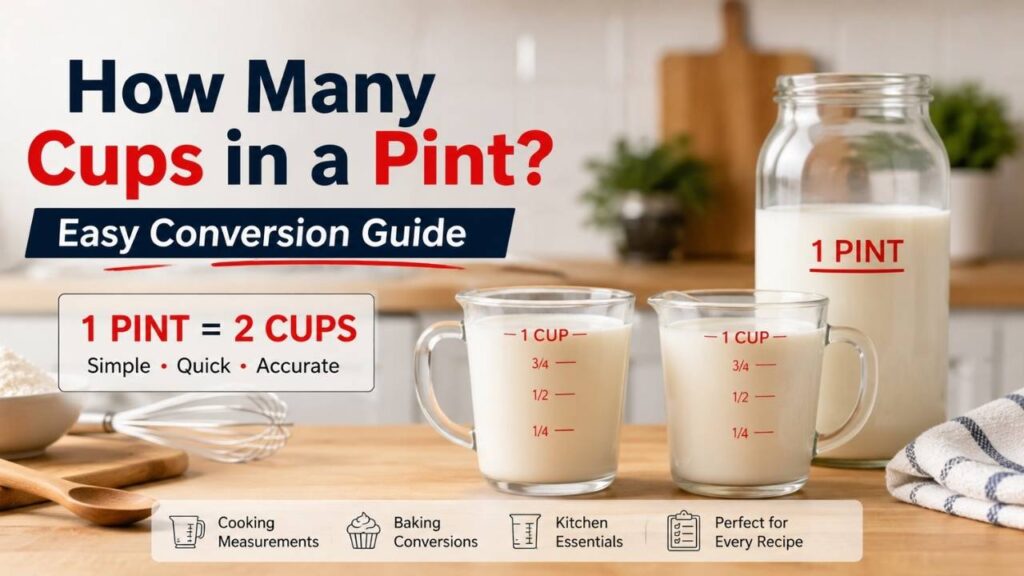

If you’ve ever wondered how many cups in a pint, you’re not alone. This is one of the most common cooking measurements and baking measurements people search for when following recipes. Whether you’re preparing a family dinner, baking a cake, or scaling a recipe, understanding kitchen conversions can save time and help you avoid mistakes.
The simple answer is that 1 pint equals 2 cups in the US customary measurement system. Knowing this basic pint to cups conversion makes it easier to measure liquids and ingredients accurately. Many recipes use pints, while others use cups, so learning how these units relate helps you follow instructions with confidence.
In this guide, you’ll learn how many cups are in a pint, how to use a pint conversion formula, common recipe conversions, and the differences between US and UK measurements. You’ll also find helpful charts and practical examples that make volume conversion simple and easy to understand.
Quick Answer
1 pint = 2 cups
This is the standard conversion used in the United States for most liquid measurements and recipe measurements.
Quick Conversion Formula
Cups = Pints × 2
For example:
- ½ pint = 1 cup
- 1 pint = 2 cups
- 2 pints = 4 cups
- 4 pints = 8 cups
If you’re looking for a quick pint to cup conversion, simply multiply the number of pints by two. This easy formula works for most cooking, baking, and everyday kitchen measurement tasks.
Understanding cups in a pint is one of the most useful skills in kitchen math. Once you remember that two cups make one pint, you’ll find it much easier to convert measurements and adjust recipes whenever needed.
How Many Cups Are in 1 Pint?
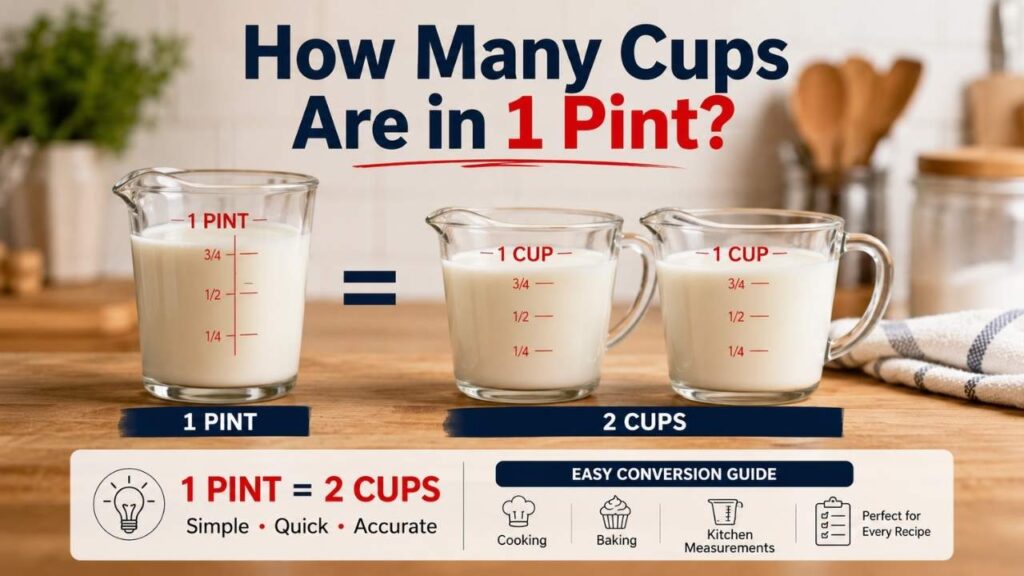
The answer to how many cups are in one pint is simple: 1 pint equals 2 cups. This standard volume conversion applies to the US customary measurement system, which most American recipes use. If you’re making soup, baking cookies, or preparing a drink, this conversion helps you measure ingredients correctly.
Many people search for cups in a pint because recipes often switch between measurement units. Instead of guessing, remember that every pint contains exactly two cups. This makes it easy to scale recipes up or down without affecting the final result.
For example, if a recipe calls for 1 pint of milk, you can use 2 cups of milk instead. Likewise, if you have 2 cups of liquid, you already have 1 pint. Learning this basic pint conversion can improve your confidence in the kitchen and make everyday recipe measurements much easier to handle.
Pint to Cups Conversion Formula
Knowing the pint to cups formula allows you to convert measurements quickly without looking at a chart. The formula is straightforward:
Cups = Pints × 2
To use this formula, simply multiply the number of pints by two. The result gives you the number of cups needed.
Examples:
- ½ pint × 2 = 1 cup
- 1 pint × 2 = 2 cups
- 2 pints × 2 = 4 cups
- 4 pints × 2 = 8 cups
This method works for most cooking conversions, baking conversions, and everyday kitchen measurements. Whether you’re adjusting a recipe or measuring ingredients, this simple formula saves time and reduces errors.
Understanding how to convert pints to cups also helps when doubling or halving recipes. Instead of searching for a calculator every time, you can perform the conversion in seconds and continue cooking with confidence.
Pint to Cups Conversion Chart
A pint to cups conversion chart offers a quick reference for common measurements. Instead of calculating each conversion manually, you can use this table while cooking or baking.
| Pints | Cups |
| ¼ pint | ½ cup |
| ½ pint | 1 cup |
| 1 pint | 2 cups |
| 2 pints | 4 cups |
| 3 pints | 6 cups |
| 4 pints | 8 cups |
| 8 pints | 16 cups |
This conversion table helps with everything from small baking projects to large family meals. Many home cooks keep a kitchen conversion chart nearby because it speeds up meal preparation and improves accuracy.
When you regularly work with recipes, understanding cups and pints conversion becomes second nature. A chart like this eliminates confusion and helps ensure that ingredients stay properly balanced throughout the cooking process.
Common Pint Conversions Used in Recipes
Many recipes use measurements larger or smaller than one pint. Understanding these common conversions makes recipe preparation much easier.
Half Pint to Cups
A half pint equals 1 cup. This conversion often appears in dessert recipes, sauces, and beverages.
2 Pints to Cups
If you’re wondering how many cups are in 2 pints, the answer is 4 cups. Simply multiply 2 by 2.
4 Pints to Cups
4 pints equal 8 cups. This measurement frequently appears in soups, broths, and large-batch recipes.
8 Pints to Cups
8 pints equal 16 cups, which is also equal to one gallon. This conversion is useful when preparing food for gatherings or events.
These common recipe conversions help you work with ingredients more efficiently. Once you memorize these values, you’ll spend less time converting measurements and more time enjoying the cooking process.
Cups, Pints, Quarts, and Gallons Explained
Understanding the relationship between cups, pints, quarts, and gallons helps you master basic kitchen math.
Here’s a simple measurement hierarchy:
- 2 cups = 1 pint
- 2 pints = 1 quart
- 4 quarts = 1 gallon
You can think of these units as building blocks. Two cups create one pint. Two pints create one quart. Four quarts create one gallon.
Many cooks use a simple memory trick:
“Two cups in a pint, two pints in a quart, four quarts in a gallon.”
This phrase makes it easier to remember common kitchen conversions. Once you understand how these units connect, you’ll have an easier time following recipes and adjusting ingredient amounts when needed.
US Pint vs UK Pint
Not all pints are the same. The US pint and UK pint use different measurement systems.
A US pint equals 2 US cups. This is the measurement most American recipes use.
An Imperial pint, which is common in the United Kingdom, contains more liquid than a US pint. As a result, an Imperial pint equals approximately 2.4 US cups.
This difference matters when you follow international recipes. Using the wrong pint measurement can affect ingredient ratios and change the final outcome of a dish.
Whenever you use a recipe from another country, check whether it uses US customary units or Imperial measurements. Taking a few seconds to verify the measurement system can prevent mistakes and improve recipe accuracy.
Dry Pint vs Liquid Pint
Many people assume that all pints measure the same thing, but dry pints and liquid pints serve different purposes.
A liquid pint measures fluids such as water, milk, juice, or broth. Most pint to cups conversions refer to liquid pints.
A dry pint measures items such as berries, cherries, or other produce sold by volume. While a dry pint often fills a similar container, its measurement differs from a liquid pint.
Understanding the difference helps you follow recipes more accurately. If a recipe calls for liquid ingredients, use liquid measurements. If you’re measuring fresh produce sold by the pint, check whether the recipe refers to a dry or liquid measurement.
Knowing the distinction between dry pint vs liquid pint helps prevent confusion and improves overall cooking results.
Why Knowing Pint-to-Cup Conversions Matters
Understanding how many cups make a pint provides several practical benefits in the kitchen.
First, it helps you follow recipes accurately. Incorrect measurements can affect flavor, texture, and consistency.
Second, it makes recipe scaling easier. Whether you want to double a recipe for guests or cut it in half for a smaller serving, quick pint conversion skills save time.
Third, it improves confidence. Instead of stopping to search for every conversion, you can continue cooking without interruption.
Finally, accurate cooking measurements and baking measurements reduce waste. Using the correct amount of ingredients helps you achieve better results and avoid costly mistakes.
For anyone who cooks regularly, understanding cups in a pint is a simple skill that delivers long-term benefits.
Kitchen Measurement Cheat Sheet
Here are some of the most useful kitchen measurement conversions to remember:
| Measurement | Equivalent |
| 1 cup | 8 fluid ounces |
| 2 cups | 1 pint |
| 4 cups | 1 quart |
| 8 cups | ½ gallon |
| 16 cups | 1 gallon |
This kitchen measurement chart serves as a quick reference for everyday cooking and baking.
Many recipes require multiple conversions, so keeping a simple cheat sheet nearby can save time. Whether you’re measuring liquids, scaling recipes, or converting between units, this chart helps simplify the process.
Learning these basic conversions creates a strong foundation for successful cooking and baking.
FAQs
Is 2 Cups Equal to 1 Pint?
Yes. In the US customary system, 2 cups equal 1 pint.
How Many Cups Are in Half a Pint?
A half pint equals 1 cup.
How Many Cups Are in 2 Pints?
2 pints equal 4 cups.
Is a Pint Bigger Than a Cup?
Yes. One pint contains 2 cups, making it larger than a single cup.
How Many Ounces Are in a Pint?
A US pint contains 16 fluid ounces.
What Comes After a Pint?
The next larger unit is a quart, and 2 pints equal 1 quart.
Is a UK Pint the Same as a US Pint?
No. A UK Imperial pint is larger than a US pint and contains approximately 2.4 US cups.
Conclusion
Now that you know how many cups are in a pint, converting measurements in the kitchen becomes much easier. Remember the simple rule: 1 pint equals 2 cups in the US customary measurement system. Whether you’re following a recipe, adjusting ingredient amounts, or learning basic kitchen conversions, this conversion can save time and improve accuracy.
Understanding the relationship between cups and pints also helps when working with other cooking measurements, including quarts, gallons, and fluid ounces. By using a pint to cups conversion chart or the simple formula Cups = Pints × 2, you can quickly convert measurements without guesswork.
The next time you need to know how many cups make a pint, you’ll have the answer ready. Keep this guide handy as a useful kitchen measurement reference, and you’ll be able to handle everyday recipe conversions with confidence and ease.