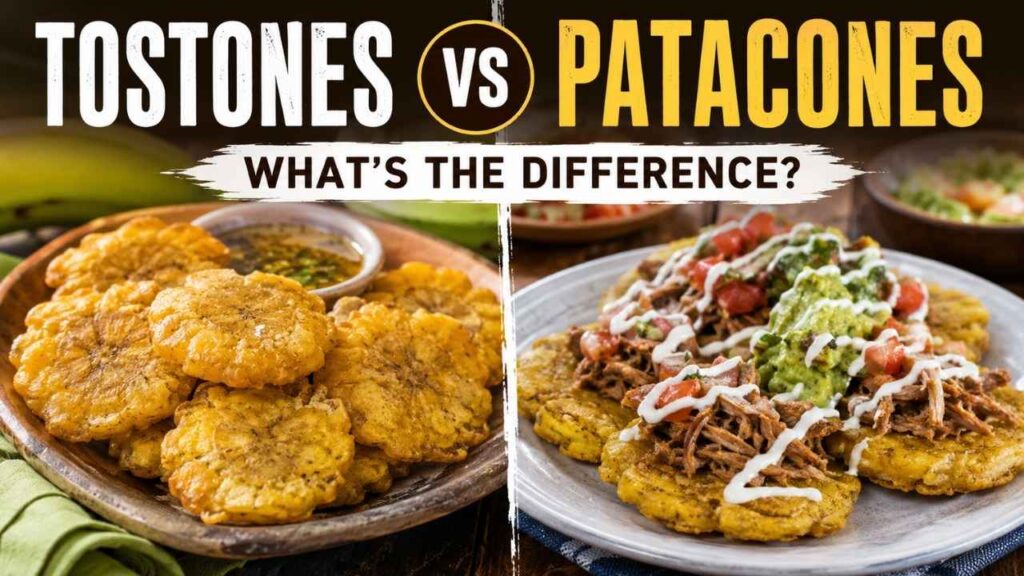

If you have ever wondered about tostones vs patacones, you are not alone. Many people ask whether tostones and patacones are the same thing or if they are completely different dishes. The simple answer is that both are made from green plantains and follow a similar cooking process. Cooks slice unripe plantains, fry them, flatten them, and fry them again to create crispy, golden bites known as twice-fried plantains.
The biggest difference between tostones vs patacones comes from regional naming and serving traditions. In many Caribbean countries, people use the term tostones, while several South American countries prefer patacones.
Although the names differ, both dishes play an important role in Latin American cuisine and remain popular as a plantain side dish, appetizer, or snack. In this guide, you’ll discover their similarities, differences, cultural roots, and the best ways to enjoy them.
Tostones vs Patacones at a Glance
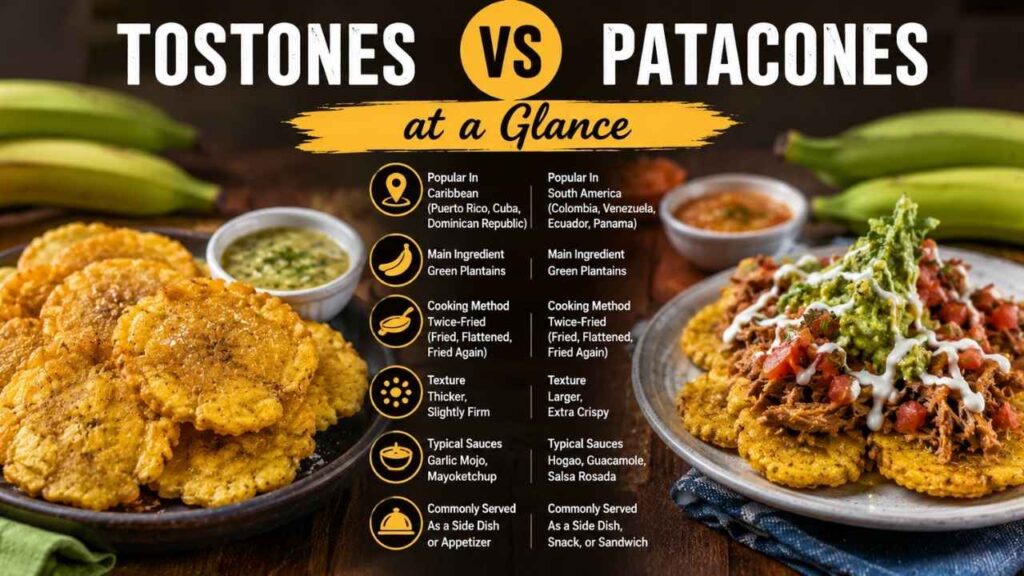
At first glance, tostones and patacones look almost identical. Both dishes use green plantains, and both follow the same basic method of slicing, frying, flattening, and frying again. This process creates the crispy texture that makes these fried green plantains so popular across Latin American cuisine.
The main difference lies in regional traditions. Caribbean countries such as Puerto Rico, Cuba, and the Dominican Republic typically call them tostones. In countries such as Colombia, Venezuela, Ecuador, and Panama, people usually refer to them as patacones. Some regions serve them thicker, while others prefer a larger and flatter shape.
If you’re searching for the difference between tostones and patacones, the answer is often more about culture, naming, and presentation than ingredients or cooking techniques.
Quick Comparison Table
| Feature | Tostones | Patacones |
| Main Ingredient | Green Plantains | Green Plantains |
| Cooking Method | Twice-Fried Plantains | Twice-Fried Plantains |
| Popular Regions | Puerto Rico, Cuba, Dominican Republic | Colombia, Venezuela, Ecuador, Panama |
| Texture | Slightly Thicker | Often Larger and Flatter |
| Common Sauces | Garlic Mojo Sauce, Mayoketchup | Hogao Sauce, Guacamole |
| Serving Style | Side Dish or Appetizer | Side Dish, Snack, or Sandwich Base |
| Flavor | Savory and Crispy | Savory and Crispy |
What Are Tostones?
Tostones are crispy slices of green plantains that people enjoy throughout the Caribbean. To make them, cooks peel unripe plantains, cut them into thick rounds, fry them until slightly tender, flatten them, and fry them again until golden and crunchy. This double-frying method creates the signature texture that makes twice-fried plantains so satisfying.
In places like Puerto Rico, Cuba, and the Dominican Republic, tostones appear on restaurant menus, family dinner tables, and street food stalls. Many people serve them as a plantain side dish alongside seafood, grilled meats, rice dishes, and beans. Others enjoy them as a snack with dipping sauces.
The flavor of tostones is mild and savory, making them a perfect base for toppings such as garlic sauce, shredded meat, avocado, or fresh salsa. Their crunchy texture and versatility have made them one of the most popular fried plantain dishes in the Caribbean.
Origin of Tostones
The exact origin of tostones is difficult to trace because plantains have played an important role in many Caribbean cultures for centuries. Spanish colonists introduced plantains to the Americas, and local communities quickly adapted them into everyday cooking. Over time, the practice of frying and flattening green plantains became a traditional method across several islands.
Today, tostones remain strongly associated with Puerto Rican cuisine, Cuban cuisine, and Dominican cuisine. While each country prepares them slightly differently, the basic concept remains the same. Their popularity comes from their simple ingredients, affordable cost, and ability to pair with almost any meal.
How Tostones Are Made
Making authentic tostones requires only a few ingredients. Cooks start with firm green plantains because ripe plantains contain too much sugar and become soft during frying. After peeling the plantains, they cut them into thick slices and fry them until they soften slightly.
Next, each piece gets flattened using a plate, plantain press, or flat object. After flattening, the plantains return to the hot oil for a second fry. This step creates the crispy exterior that defines crispy fried plantains.
Many cooks season the finished tostones with salt and serve them immediately while they are still warm and crunchy.
Traditional Ways Tostones Are Served
People enjoy tostones in many different ways throughout the Caribbean. Some families serve them as a simple plantain appetizer with a side of garlic mojo sauce. Others pair them with seafood, roasted pork, chicken, or rice-based meals.
In restaurants, tostones often appear topped with shrimp, pulled pork, avocado, or cheese. Their neutral flavor allows them to complement both rich and spicy foods. Whether served as a snack or a full side dish, tostones remain a favorite part of Caribbean food culture.
What Are Patacones?
Patacones are the South American version of twice-fried green plantains. Like tostones, they start with slices of green plantains that are fried, flattened, and fried again until crispy. The ingredients are nearly identical, but local traditions create small differences in presentation and serving style.
Patacones are especially popular in Colombia, Venezuela, Ecuador, and Panama. Many regions prepare them larger and flatter than traditional tostones. This shape makes them ideal for holding toppings and fillings.
Because of their crunchy texture and savory flavor, patacones work well as a side dish, appetizer, snack, or even the base for a sandwich. Their versatility explains why they remain one of the most beloved dishes in South American cuisine.
Origin of Patacones
The history of patacones reflects the widespread use of plantains across tropical regions of South America. Communities in countries such as Colombia and Venezuela developed their own preparation styles while keeping the traditional double-frying technique.
Over time, the term patacones became the preferred name in many South American countries, even though the cooking process remained almost identical to that of tostones. Today, patacones represent an important part of regional food culture and continue to appear in homes, restaurants, and street food markets.
How Patacones Are Made
The preparation process for patacones closely mirrors the process used for tostones. Cooks peel and slice green plantains, fry them briefly, flatten them, and then fry them a second time.
Some regions flatten the plantains more aggressively, producing a thinner and crispier texture. Others leave them slightly thicker for a softer center. After frying, cooks often season the patacones with salt and serve them with flavorful sauces or toppings.
This simple technique transforms ordinary plantains into a crispy snack that pairs perfectly with many traditional dishes.
Traditional Ways Patacones Are Served
Patacones appear in countless forms across South America. Some people serve them as a simple side dish with grilled meat or seafood. Others use them as a foundation for larger meals topped with beef, chicken, cheese, avocado, or vegetables.
In countries like Colombia and Venezuela, patacones often become the base of a famous patacon sandwich, where two flattened plantains replace traditional bread. This creative serving style adds extra crunch and flavor while highlighting the versatility of fried green plantains.
Are Tostones and Patacones the Same Thing?
Many people ask, “Are tostones and patacones the same thing?” In most cases, the answer is yes. Both dishes use green plantains, and both follow the same cooking process. Cooks slice the plantains, fry them, flatten them, and fry them again to create crispy fried plantains with a golden exterior and soft center.
The main difference between tostones and patacones comes from regional traditions rather than ingredients. Caribbean countries usually use the term tostones, while several South American countries prefer the name patacones. Depending on the region, the size, thickness, toppings, and sauces may vary slightly.
If you compare the ingredients and cooking method, both dishes belong to the same family of twice-fried plantains. This is why many food experts consider them different names for a very similar dish.
Similarities
Tostones and patacones share many qualities. Both use unripe plantains rather than ripe ones. Both rely on a double-frying technique that creates a crunchy texture. They also serve as a popular plantain side dish, appetizer, or snack throughout Latin America.
Both dishes offer a mild, savory flavor that pairs well with meats, seafood, vegetables, and sauces. Because of their versatility, they appear in homes, restaurants, and street food markets across multiple countries.
Differences
While the differences are small, they still exist. In some regions, tostones are slightly thicker, while patacones are often larger and flatter. The toppings and sauces also change from country to country.
For example, Caribbean-style tostones often pair with garlic mojo sauce, while South American patacones frequently come with hogao sauce, avocado, or meat toppings. These local traditions give each version its own identity while preserving the same core recipe.
Tostones vs Patacones: Key Differences Explained
Although many people use the names interchangeably, a closer look reveals a few differences worth noting. Understanding these variations can help you appreciate the rich diversity of Latin American cuisine.
Regional Names
The most obvious difference is the name itself. In Puerto Rico, Cuba, and the Dominican Republic, people typically call them tostones. In Colombia, Venezuela, Ecuador, and Panama, the preferred term is patacones.
Shape and Thickness
Some Caribbean cooks prefer thicker slices that remain slightly soft in the center. In contrast, many South American cooks flatten the plantains more aggressively, creating larger and crispier patacones.
Texture
Because of the differences in thickness, texture can vary slightly. Thicker tostones often provide a combination of crunch and softness, while flatter patacones may feel extra crispy.
Toppings
Tostones often appear with simple toppings or dipping sauces. Patacones frequently serve as a base for larger toppings such as shredded beef, chicken, cheese, or avocado.
Dipping Sauces
Caribbean recipes commonly feature garlic mojo sauce, while South American versions often include hogao sauce, guacamole, or salsa rosada.
Restaurant Presentations
Restaurants frequently use patacones as sandwich substitutes or loaded appetizers. Tostones usually appear as a side dish or appetizer served alongside traditional meals.
Why Do Different Countries Use Different Names?
Food names often change as recipes travel between regions. This is exactly what happened with tostones and patacones. While the cooking method remained largely the same, different countries developed their own names based on local language and cultural traditions.
Caribbean Terminology
The term tostones is deeply connected to Caribbean cooking traditions. Countries such as Puerto Rico, Cuba, and the Dominican Republic have used the name for generations. Today, it remains the most recognized term throughout the Caribbean.
South American Terminology
In much of South America, people use the word patacones instead. The dish became a staple in countries such as Colombia, Venezuela, Ecuador, and Panama, where local communities adapted it into their own food culture.
Historical Language Influences
Language plays a major role in regional food names. As Spanish-speaking communities spread recipes across different regions, local dialects influenced how people referred to familiar dishes. This process explains why one recipe can have multiple names while remaining fundamentally the same.
Countries Where Tostones Are Popular
Puerto Rico
In Puerto Rican cuisine, tostones are one of the most common side dishes. Families often serve them alongside seafood, roasted pork, rice, and beans. Many restaurants also offer stuffed or loaded versions for special occasions.
Cuba
Cuban cooks frequently pair tostones with grilled meats and traditional stews. Their crispy texture balances rich and flavorful main dishes, making them a regular part of everyday meals.
Dominican Republic
The Dominican Republic embraces tostones as both a snack and a side dish. Vendors often sell freshly fried tostones in markets, while home cooks prepare them for family gatherings and celebrations.
Countries Where Patacones Are Popular
Colombia
In Colombian cuisine, patacones are incredibly popular. People enjoy them as snacks, appetizers, and side dishes. Some regions even use them as the foundation for large meals topped with meat, cheese, and vegetables.
Venezuela
Venezuelan cooks often transform patacones into hearty meals. Loaded versions topped with shredded beef, chicken, and avocado remain especially popular.
Ecuador
Throughout Ecuador, patacones appear alongside seafood dishes, grilled meats, and soups. Their crunchy texture adds contrast to many traditional recipes.
Panama
In Panama, patacones frequently accompany fish, chicken, and rice dishes. Many restaurants offer them as an alternative to french fries.
Costa Rica
Costa Rican kitchens also prepare patacones regularly. They often serve them with black bean dips, fresh salsa, or local seafood dishes.
How Tostones and Patacones Are Traditionally Served
The flexibility of fried green plantains helps explain their lasting popularity. Both dishes work well in many settings.
As a Side Dish
Many families serve tostones and patacones alongside grilled meats, seafood, rice dishes, and stews. Their crispy texture complements a wide variety of foods.
As Street Food
Street vendors throughout Latin America often sell freshly fried plantains as a quick and satisfying snack. Their affordable price and simple preparation make them a favorite among locals and tourists alike.
As Appetizers
Restaurants frequently serve them as appetizers paired with dipping sauces. Guests enjoy their crunchy texture before moving on to larger meals.
Popular Sauces and Toppings
One reason people love tostones and patacones is their ability to pair with countless flavors. The neutral taste of green plantains allows sauces and toppings to shine.
Garlic Mojo Sauce
This classic Caribbean sauce combines garlic, citrus juice, and oil. It adds bold flavor without overpowering the crispy plantains.
Hogao Sauce
Popular in Colombia, hogao combines tomatoes, onions, and seasonings into a rich topping that pairs beautifully with patacones.
Guacamole
Creamy avocado provides a fresh contrast to crunchy plantains and remains one of the most popular toppings throughout Latin America.
Salsa Rosada
This simple mixture of ketchup and mayonnaise delivers a creamy, tangy flavor that works well with both tostones and patacones.
Seafood Toppings
Many coastal regions top fried plantains with shrimp, crab, or fish. These toppings transform a simple side dish into a complete meal packed with flavor.
What Is a Patacon Sandwich?
A patacon sandwich is one of the most creative ways to enjoy patacones. Instead of using bread, cooks use two large fried green plantains as the top and bottom layers of the sandwich. This creates a crunchy, savory alternative to traditional sandwich buns.
The filling varies by region and personal preference. Popular options include shredded beef, grilled chicken, pulled pork, cheese, avocado, lettuce, tomatoes, and special sauces. In countries such as Colombia and Venezuela, patacon sandwiches have become a popular street food because they are filling, flavorful, and easy to customize.
Many restaurants now offer modern versions that include seafood, spicy sauces, or fusion-inspired ingredients. If you love crispy textures and bold flavors, a patacon sandwich is a delicious way to experience South American cuisine.
How It Is Made
To prepare a patacon sandwich, cooks first make two large twice-fried plantains. After the second fry, they allow the plantains to cool slightly before adding fillings. The finished sandwich combines crunchy plantains with tender meat, fresh vegetables, and creamy sauces.
Popular Fillings
Common fillings include:
- Shredded beef
- Pulled pork
- Grilled chicken
- Avocado
- Cheese
- Lettuce
- Tomatoes
- Garlic sauce
- Salsa rosada
Countries Where It Is Common
Patacon sandwiches are especially popular in:
- Colombia
- Venezuela
- Panama
- Ecuador
Many street vendors and restaurants feature them as signature menu items.
Tostones vs Patacones Nutrition Comparison
When comparing tostones vs patacones, nutrition remains nearly identical because both dishes use the same primary ingredient: green plantains. The exact nutritional value depends on portion size, oil absorption, and toppings.
Plantains naturally provide carbohydrates, fiber, vitamins, and minerals. They also contain potassium, which supports healthy muscle and nerve function. Because cooks fry both dishes twice, the fat content increases compared to baked plantains.
However, toppings can have a larger impact on overall nutrition than the plantains themselves. Simple versions seasoned with salt contain fewer calories than loaded versions topped with cheese, sauces, or fried meats.
Calories
A serving of plain tostones or patacones typically contains moderate calories, though exact numbers vary depending on size and cooking method.
Carbohydrates
Plantains are naturally rich in carbohydrates, making them a good source of energy.
Fiber
Green plantains provide dietary fiber, which may help support digestion and fullness.
Fat Content
Double frying increases fat content. Baking or air frying can reduce the amount of oil used.
Are Tostones or Patacones Healthier Than French Fries?
Many people wonder whether tostones or patacones are healthier than traditional french fries. The answer depends on preparation methods and serving sizes.
Both dishes come from a whole-food ingredient—green plantains—which naturally contains fiber, vitamins, and minerals. French fries, on the other hand, come from potatoes, which also offer nutritional benefits. Because both foods are fried, neither should be considered a low-calorie option.
However, some people prefer plantains because they contain more fiber and a different nutrient profile than potatoes. You can also make healthier versions by baking or air frying them instead of deep frying.
If you enjoy them in moderation and pair them with balanced meals, both tostones and patacones can fit into a healthy eating plan.
Related Plantain Dishes You Should Know
The world of plantain recipes extends far beyond tostones and patacones. Several other dishes use plantains in unique ways and deserve a place on your culinary radar.
Chifles
Chifles are thinly sliced plantain chips that cooks fry until crisp. Unlike tostones, they do not require flattening. Their texture resembles potato chips, making them a popular snack throughout parts of South America.
Maduros
Maduros use ripe plantains rather than green plantains. The natural sugars caramelize during cooking, creating a soft texture and sweet flavor. Many people serve maduros alongside savory dishes to create balance.
Tajadas
Tajadas are long slices of ripe plantains that cooks fry until golden brown. They are sweeter than patacones and often accompany traditional meals in several Latin American countries.
Plantain Chips
Plantain chips come in many forms and flavors. Some are salted, while others include spices, garlic, or chili seasoning. They provide a convenient snack option for plantain lovers.
How To Make Tostones or Patacones at Home
Making authentic tostones or patacones at home is surprisingly simple. You only need a few ingredients and basic kitchen tools to create crispy, delicious results.
Ingredients
- 2 green plantains
- Vegetable oil for frying
- Salt to taste
Optional:
- Garlic mojo sauce
- Guacamole
- Hogao sauce
Step-by-Step Instructions
- Peel the green plantains.
- Cut them into thick slices.
- Heat oil in a frying pan.
- Fry the slices for 3 to 4 minutes until slightly soft.
- Remove and drain briefly.
- Flatten each piece using a plate or plantain press.
- Return them to the hot oil.
- Fry until golden and crispy.
- Sprinkle with salt and serve immediately.
Expert Tips
- Always use unripe plantains.
- Keep oil at a consistent temperature.
- Do not overcrowd the pan.
- Serve immediately for maximum crispiness.
Common Mistakes When Making Tostones and Patacones
Even simple recipes can go wrong if you overlook important details. Avoid these common mistakes to achieve better results.
Using Ripe Plantains
Many beginners accidentally use ripe plantains. Because ripe plantains contain more sugar, they become soft rather than crispy during frying.
Frying at the Wrong Temperature
Oil that is too cool causes the plantains to absorb excess oil. Oil that is too hot may burn the outside before the inside cooks properly.
Flattening Too Thin
Pressing the plantains too much can make them fragile. They may break apart during the second fry.
Skipping the Second Fry
The second fry creates the signature crunch that defines crispy fried plantains. Skipping this step results in a softer texture.
FAQs
Are tostones and patacones the same thing?
Yes. Both dishes use green plantains and a similar double-frying process. The main difference is regional naming and serving traditions.
Why do they have different names?
Different countries developed their own culinary traditions and terminology over time, resulting in names such as tostones and patacones.
Which countries eat patacones?
Patacones are especially popular in Colombia, Venezuela, Ecuador, Panama, and Costa Rica.
Which countries eat tostones?
Tostones are common in Puerto Rico, Cuba, and the Dominican Republic.
Can you bake them instead of frying?
Yes. Baking or air frying can create a lighter version while still producing a crispy texture.
What sauces pair best with them?
Popular choices include garlic mojo sauce, hogao sauce, guacamole, and salsa rosada.
Conclusion
When comparing tostones vs patacones, the differences are much smaller than many people expect. Both dishes feature green plantains that cooks fry, flatten, and fry again to create delicious twice-fried plantains with a crispy texture and savory flavor. The biggest distinction comes from regional naming traditions rather than ingredients or preparation methods.
Whether you call them tostones in the Caribbean or patacones in South America, these beloved fried plantains remain an important part of Latin American cuisine. From simple side dishes to loaded appetizers and famous patacon sandwiches, they offer countless ways to enjoy one of the region’s most versatile ingredients.
No matter which name you prefer, both dishes deliver the same satisfying crunch and rich cultural heritage that plantain lovers appreciate around the world.