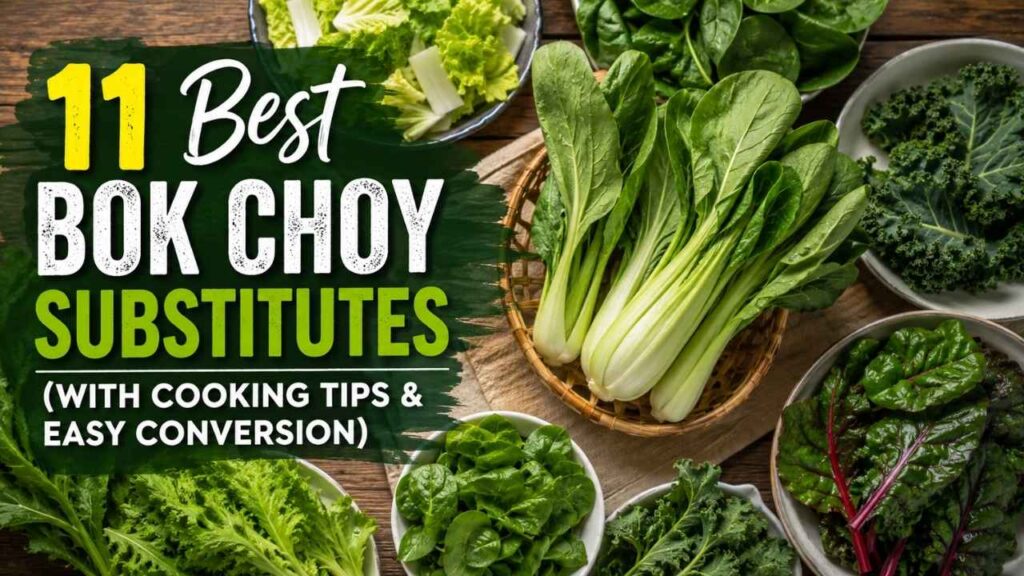

If you have a recipe that calls for bok choy but you don’t have any on hand, don’t worry. There are many bok choy substitutes that can give you a similar taste and texture. Whether you’re making a stir-fry, ramen, soup, fried rice, or another Asian-inspired meal, you can still enjoy great results by choosing the right vegetable. The best substitute for bok choy depends on your recipe, but several easy options are available at most grocery stores.
In this guide, you’ll learn what to use instead of bok choy, which vegetables offer the closest match, and how to use each one correctly. We’ll compare their flavor, texture, and cooking time, so you can pick the best bok choy replacement with confidence.
You’ll also find simple substitution ratios, helpful cooking tips, and answers to common questions. From Napa cabbage and Swiss chard to spinach, kale, and other leafy greens, these easy alternatives can help you finish your meal without missing a step.
What Is the Best Substitute for Bok Choy?
The best substitute for bok choy is Napa cabbage. It has a mild flavor, crisp stems, and tender leaves, making it the closest match in both taste and texture. You can use it in almost any recipe that calls for bok choy, including stir-fries, soups, ramen, noodle dishes, and hot pot. In most recipes, you can replace bok choy with Napa cabbage using a simple 1:1 ratio.
If you don’t have Napa cabbage, don’t worry. Other great bok choy alternatives include Swiss chard, choy sum, baby spinach, green cabbage, tatsoi, and mustard greens. Each vegetable works best in different recipes, so choosing the right one depends on the dish you’re making. The comparison table below makes it easy to find the perfect substitute for bok choy in just a few seconds.
Bok Choy Substitute Comparison Table
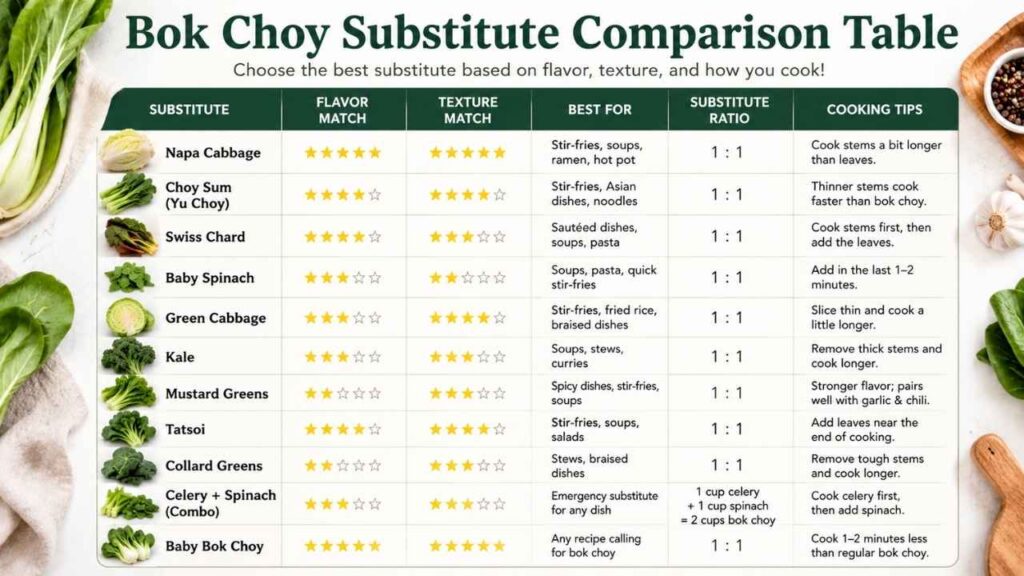
| Substitute | Flavor Match | Texture Match | Best For | Substitute Ratio |
| Napa Cabbage | Excellent | Excellent | Stir-fries, soups, ramen | 1:1 |
| Choy Sum | Excellent | Very Good | Asian recipes, stir-fries | 1:1 |
| Swiss Chard | Very Good | Good | Sautéed dishes, soups | 1:1 |
| Baby Spinach | Good | Soft | Soups, pasta, quick stir-fries | 1:1 (add at the end) |
| Green Cabbage | Good | Crunchy | Stir-fries, braised dishes | 1:1 |
| Kale | Good | Firm | Soups, stews, curries | 1:1 |
| Mustard Greens | Fair | Good | Spicy dishes | 1:1 |
| Tatsoi | Very Good | Tender | Salads and stir-fries | 1:1 |
| Yu Choy | Excellent | Very Good | Chinese cooking | 1:1 |
| Collard Greens | Fair | Firm | Slow-cooked meals | 1:1 |
| Celery + Spinach | Good | Good | Emergency substitute | 1 cup + 1 cup = 2 cups bok choy |
This quick table gives you an easy way to compare the best bok choy substitutes. While Napa cabbage offers the closest match, other vegetables can work just as well depending on the recipe. Think about the flavor, texture, and cooking time before choosing a bok choy substitute, and you’ll get the best results every time.
1. Napa Cabbage
Napa cabbage is the closest substitute for bok choy because it shares many of the same qualities. It has soft green leaves, crunchy white stems, and a light, slightly sweet flavor. These features make it an excellent choice for almost every recipe, especially stir-fries, soups, ramen, fried rice, and other Asian recipes. If you’re looking for the best substitute for bok choy, this should be your first choice.
Use Napa cabbage in a 1:1 ratio when replacing bok choy. Chop the thick stems into smaller pieces because they take a little longer to cook than the leaves. Add the stems first, then stir in the leaves a few minutes later. This simple step helps keep the vegetable crisp and fresh instead of soft and overcooked. If you want the closest flavor and texture, Napa cabbage is hard to beat.
2. Choy Sum (Yu Choy)
Choy sum, also called yu choy, is another excellent bok choy alternative. It belongs to the same vegetable family and has a similar fresh taste with tender stems and leafy tops. Many Chinese recipes already use choy sum, so it works naturally in stir-fries, noodle dishes, soups, and steamed meals. If you shop at an Asian grocery store, you can usually find it next to bok choy.
Replace bok choy with choy sum using a 1:1 ratio. Since its stems are thinner, it cooks a little faster than bok choy. Keep an eye on the pan to avoid overcooking the leaves. Choy sum has a slightly sweeter flavor than bok choy, but the difference is small. If you want a vegetable with a similar look, taste, and texture, choy sum is one of the best options available.
3. Swiss Chard
Swiss chard is a great substitute for bok choy if you want a vegetable with tender leaves and firm stems. The leaves become soft when cooked, while the stems stay slightly crisp. This combination makes Swiss chard a good choice for stir-fries, soups, pasta, and simple side dishes. It has a mild earthy flavor that blends well with garlic, ginger, soy sauce, and sesame oil.
Use Swiss chard as a 1:1 replacement for bok choy. Slice the stems into small pieces and cook them for two to three minutes before adding the leaves. This helps both parts finish cooking at the same time. If you’re looking for a healthy substitute for bok choy, Swiss chard is rich in vitamins and adds beautiful color to your meal without changing the overall flavor too much.
4. Baby Spinach
If you need a quick and easy bok choy replacement, baby spinach is an excellent choice. It has soft, tender leaves and a mild flavor that works well in many dishes. While spinach doesn’t have the crunchy stems of bok choy, it still fits nicely in soups, ramen, curries, pasta, and quick stir-fries. Most grocery stores carry baby spinach all year, making it one of the easiest vegetables to find.
Replace bok choy with baby spinach using a 1:1 ratio, but remember that spinach cooks much faster. Add it during the last one or two minutes of cooking to keep the leaves fresh and bright. Cooking spinach for too long can make it soft and watery. If your recipe doesn’t rely on crunchy stems, baby spinach is a simple and reliable alternative to bok choy.
5. Green Cabbage
Green cabbage is a budget-friendly substitute for bok choy that you can find in almost every supermarket. It has a mild, slightly sweet flavor and a crunchy texture that holds up well during cooking. Although its leaves are thicker than bok choy, it works very well in stir-fries, fried rice, soups, and braised dishes. It’s also a great choice if you’re cooking for a family because one cabbage goes a long way.
Use green cabbage in a 1:1 ratio when replacing bok choy. Slice it into thin strips so it cooks evenly. Since cabbage is firmer, start cooking it a few minutes before adding other vegetables. This extra cooking time helps soften the leaves while keeping a pleasant crunch. If you’re wondering can I replace bok choy with cabbage?, the answer is yes—especially in cooked dishes where texture matters more than appearance.
6. Kale
Kale is another healthy bok choy substitute with a rich nutritional value. It has dark green leaves, a bold flavor, and a firm texture that works well in hearty recipes. Kale is a good choice for soups, stews, curries, and slow-cooked meals where the leaves have enough time to become tender. It also pairs well with garlic, onions, and other strong seasonings.
Replace bok choy with kale using a 1:1 ratio. Before cooking, remove the thick center stems because they stay tough even after cooking. Chop the leaves into bite-sized pieces and cook them a little longer than bok choy. While kale has a stronger taste than bok choy, it still makes a delicious leafy green substitute when prepared properly. If you want extra fiber and nutrients, kale is an excellent choice.
7. Mustard Greens
Mustard greens are a good bok choy alternative if you enjoy a little extra flavor. They have tender leaves, thin stems, and a slightly peppery taste that becomes milder after cooking. These greens work best in soups, stir-fries, braised dishes, and spicy recipes where bold flavors are welcome. They also pair nicely with garlic, chili, ginger, and soy sauce.
Use mustard greens as a 1:1 substitute for bok choy. Add the stems first, then stir in the leaves a few minutes later. Keep in mind that mustard greens have a stronger taste than bok choy, so they may change the flavor of delicate dishes. If you’re making a spicy meal or want a vegetable with a little more character, mustard greens can be an excellent replacement for bok choy while adding extra color and nutrition.
8. Tatsoi
Tatsoi is one of the closest vegetables like bok choy because it belongs to the same plant family. It has small, dark green leaves and short, tender stems with a mild, slightly mustard-like flavor. Tatsoi works well in stir-fries, soups, ramen, and even fresh salads. It cooks quickly and blends easily with garlic, ginger, soy sauce, and sesame oil, making it a great choice for many Asian recipes.
Use tatsoi as a 1:1 substitute for bok choy in most dishes. Since its leaves are delicate, add them near the end of cooking to keep their fresh texture. If you’re looking for a bok choy alternative that offers a similar taste and appearance, tatsoi is an excellent option whenever you can find it at your local market.
9. Collard Greens
Collard greens are another useful bok choy substitute, especially for recipes that cook slowly. They have large, thick leaves with a mild earthy flavor. While they don’t have the crisp stems of bok choy, they hold their shape well during cooking. Collard greens work best in soups, stews, curries, and braised dishes where they have enough time to soften.
Replace bok choy with collard greens using a 1:1 ratio. Remove the thick center stem before slicing the leaves into smaller pieces. Because collard greens are firmer, they need a few extra minutes to cook compared to bok choy. If you’re preparing a slow-cooked meal and need a filling leafy green substitute, collard greens provide great texture, plenty of nutrients, and a satisfying bite.
10. Celery and Spinach Combination
If you don’t have any of the common bok choy substitutes, try combining celery and baby spinach. This simple mix copies two important parts of bok choy. The celery adds the crunchy stems, while the spinach provides the soft leafy texture. Together, they create a practical emergency substitute for bok choy using ingredients many people already have at home.
Use 1 cup of chopped celery and 1 cup of baby spinach to replace 2 cups of bok choy. Cook the celery first because it needs more time to soften. Add the spinach during the last minute so it stays tender and fresh. This combination works well in stir-fries, fried rice, soups, and noodle dishes when you need a quick and easy bok choy replacement.
11. Baby Bok Choy
If your recipe calls for regular bok choy but you only have baby bok choy, you can use it without any problems. Baby bok choy has the same mild flavor, tender leaves, and crisp stems as mature bok choy. The biggest difference is its smaller size and slightly sweeter taste. It works perfectly in stir-fries, soups, ramen, hot pot, and steamed dishes.
Replace regular bok choy with baby bok choy using a 1:1 ratio by weight or volume. If the heads are very small, simply cut them in half before cooking. Because baby bok choy cooks faster, reduce the cooking time by a minute or two. If you’ve been searching for a substitute for baby bok choy or wondering about the difference between the two, you can confidently swap them in almost any recipe.
Best Bok Choy Substitute by Recipe
The best substitute for bok choy depends on the recipe you’re making. Some vegetables match the flavor, while others offer a similar texture. Choosing the right bok choy replacement helps your meal taste its best.
- Stir-Fries: Napa cabbage, choy sum, or Swiss chard
- Soups: Napa cabbage, kale, or baby spinach
- Ramen: Napa cabbage, tatsoi, or baby bok choy
- Fried Rice: Green cabbage or Swiss chard
- Noodle Dishes: Choy sum, tatsoi, or spinach
- Hot Pot: Napa cabbage or baby bok choy
- Curries: Kale, spinach, or collard greens
If you’re unsure which vegetable to choose, Napa cabbage remains the closest all-purpose alternative to bok choy because it offers the best balance of flavor, texture, and cooking performance.
Bok Choy vs. Common Substitutes
Although many vegetables can replace bok choy, each one has its own strengths. Napa cabbage offers the closest match in both flavor and texture. Choy sum also performs very well because it belongs to the same vegetable family. Swiss chard has similar stems but adds a mild earthy taste. Spinach works best when you only need tender leaves, while green cabbage provides extra crunch but takes longer to cook.
If nutrition is your main goal, kale and mustard greens are excellent choices because they contain plenty of vitamins and minerals. For the closest overall result in Asian recipes, choose Napa cabbage first. If that’s unavailable, choy sum and tatsoi are your next best options.
How Flavor Changes with Each Substitute
Every bok choy substitute has a slightly different flavor. Napa cabbage tastes mild and slightly sweet, making it the closest match. Choy sum has a fresh, delicate flavor that blends well with many Asian dishes. Swiss chard adds a gentle earthy taste, while baby spinach stays soft and mild after cooking.
If you choose green cabbage, expect a sweeter flavor and a firmer bite. Kale has a stronger earthy taste, while mustard greens add a light peppery kick. Tatsoi falls somewhere in the middle with a mild flavor and a hint of mustard. Knowing these differences helps you choose the right vegetable similar to bok choy based on the recipe you’re making and the flavor you want to achieve.
Texture Differences
One reason bok choy is popular is its mix of crisp stems and tender leaves. Not every substitute offers both. Napa cabbage comes closest because it has crunchy white stems and soft green leaves. Choy sum also provides a similar balance. Swiss chard has firm stems with delicate leaves, making it another good choice.
Spinach loses its shape quickly, so it’s best for soups and dishes where crunch isn’t important. Green cabbage stays firm even after cooking, while kale has thicker leaves that need more time to soften.
If your recipe depends on texture, always think about how the vegetable cooks before making a swap. Choosing the right texture often makes a bigger difference than choosing the exact same flavor.
Cooking Time Adjustments
Different vegetables cook at different speeds, so changing the cooking time helps you get the best results. Baby spinach cooks very quickly, so add it during the last one or two minutes. Swiss chard and choy sum cook at about the same speed as bok choy, but it’s still a good idea to cook their stems before the leaves.
Green cabbage, kale, and collard greens need a few extra minutes because they are firmer. Slice these vegetables into smaller pieces to help them cook faster. Napa cabbage cooks almost like bok choy, making it one of the easiest substitutes to use. Small changes in cooking time keep your vegetables fresh, colorful, and full of flavor instead of soft and overcooked.
Conversion Ratios
Most bok choy substitutes can replace bok choy using a simple 1:1 ratio, making cooking easy. For example, if your recipe calls for 2 cups of chopped bok choy, you can use 2 cups of Napa cabbage, Swiss chard, green cabbage, tatsoi, or choy sum. This works well in most stir-fries, soups, and noodle dishes.
When using baby spinach, replace it with the same amount but add it near the end because it shrinks quickly. If you’re using the celery and spinach combination, mix 1 cup of celery with 1 cup of spinach to replace 2 cups of bok choy. Following these simple substitution ratios helps you keep the right balance of vegetables in every recipe.
Common Mistakes When Replacing Bok Choy
Many people choose the right bok choy substitute but cook it the wrong way. One common mistake is adding spinach too early, which makes it soft and watery. Another mistake is cooking green cabbage for too little time, leaving it too firm. Some people also forget to remove the thick stems from kale or collard greens, which can make the dish tough.
It’s also important not to expect every substitute to taste exactly like bok choy. Each vegetable has its own flavor and texture. Pick a substitute that matches your recipe instead of choosing one just because it’s available. A few simple cooking adjustments can help almost any alternative to bok choy taste delicious.
FAQs
Can I use spinach instead of bok choy?
Yes. Baby spinach is a good substitute for soups, curries, and quick stir-fries. Add it near the end because it cooks much faster.
Is Napa cabbage the same as bok choy?
No. They are different vegetables, but Napa cabbage is the closest bok choy substitute because of its mild flavor and crisp texture.
Can I replace bok choy with cabbage?
Yes. Green cabbage and Napa cabbage both work well, although green cabbage needs a little more cooking time.
What tastes most like bok choy?
Napa cabbage and choy sum have the closest flavor and texture to bok choy.
Which substitute is healthiest?
Kale, Swiss chard, and mustard greens are all nutrient-rich choices packed with vitamins, fiber, and minerals.
Conclusion
The best substitute for bok choy is Napa cabbage because it offers the closest mix of mild flavor, crisp stems, and tender leaves. It works well in almost every recipe, from stir-fries and soups to ramen, fried rice, and hot pot. If you can’t find Napa cabbage, choy sum, Swiss chard, and baby spinach are also excellent options depending on your recipe.
Remember that the right bok choy replacement depends on how you’re cooking. Think about the flavor, texture, and cooking time before making a swap. With the substitutes and tips in this guide, you can confidently prepare delicious meals even when bok choy isn’t available. A simple ingredient change is often all you need to keep your favorite recipes tasting just right.