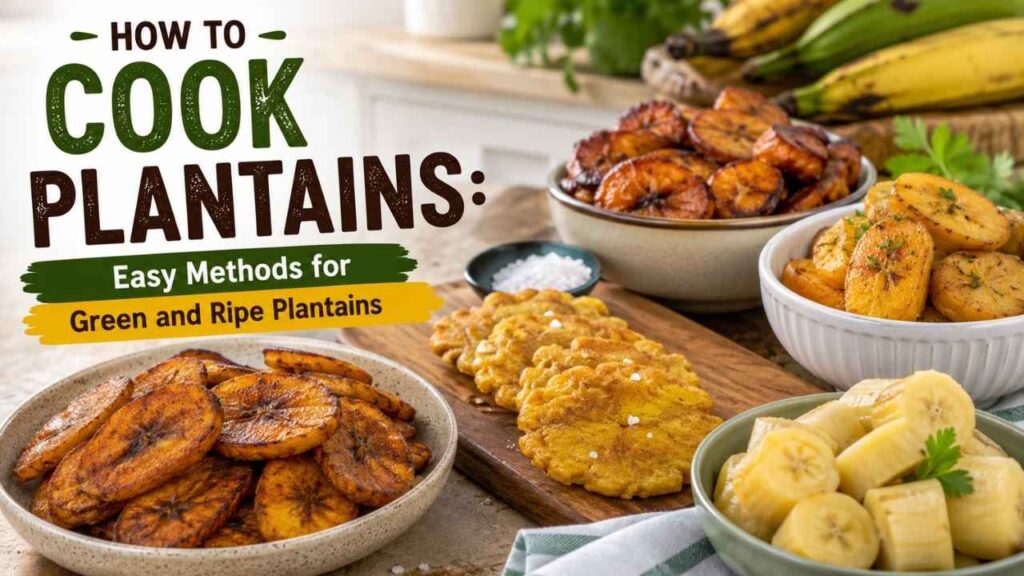

If you are wondering how to cook plantains, you are not alone. Many people see plantains at the grocery store but are unsure how to prepare them at home. The good news is that cooking plantains is simple once you understand the difference between green plantains and ripe plantains.
Plantains are a starchy tropical fruit that belongs to the same family as bananas, but they have a firmer texture and are usually cooked before eating. Depending on their ripeness, plantains can be used in both sweet and savory dishes. Green plantains work well for crispy recipes like fried plantains, while ripe plantains develop a naturally sweet flavor that becomes deliciously caramelized when cooked.
In this complete plantain cooking guide, you’ll learn how to peel plantains, the best way to cook plantains, and how to make baked plantains, air fryer plantains, boiled plantains, and more. By the end, you’ll have all the tips you need to cook perfect plantains every time.
Quick Answer
To cook plantains, first peel and slice them, then choose your preferred cooking method. Green plantains have a firm, starchy texture and work best for savory dishes, while ripe plantains are sweeter and become soft and caramelized when cooked. You can make fried plantains, baked plantains, air fryer plantains, boiled plantains, or roasted plantains depending on your taste.
Most plantains cook in 10 to 30 minutes, depending on the method. For crispy results, fry or air fry them. For a healthier option, bake or roast them. Learning how to cook plantains is simple, and once you understand the different ripeness stages, you can easily create delicious sweet or savory dishes at home.
What Are Plantains?
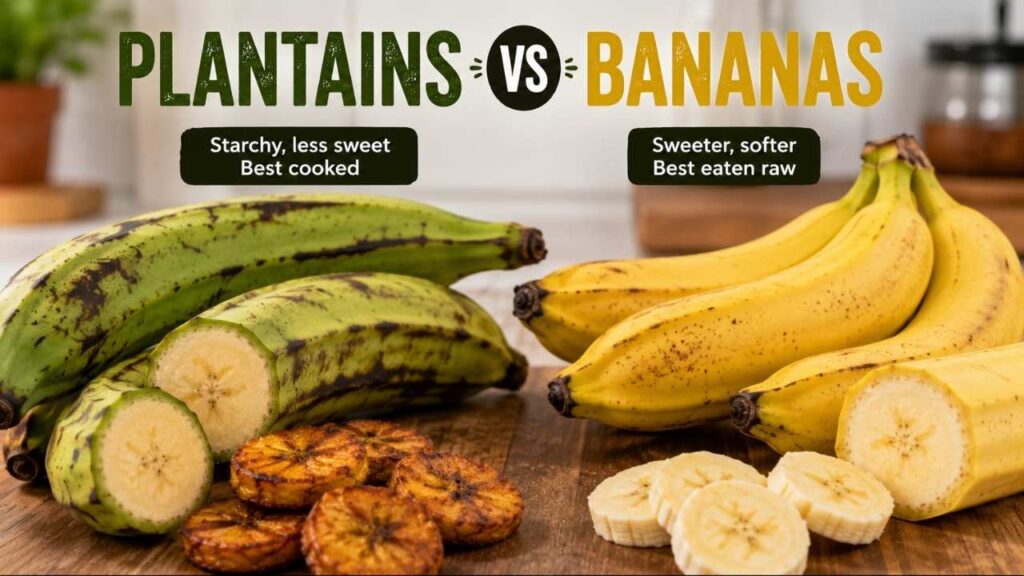
Plantains are a type of tropical fruit that belongs to the same family as bananas. Although they look similar, plantains are much starchier and less sweet, especially when they are green. Unlike regular bananas, people usually cook plantains before eating them.
Many people describe green plantains as having a texture similar to potatoes. As they ripen, they become softer and sweeter. Ripe plantains develop a rich flavor that works perfectly in both sweet and savory dishes. This versatility makes plantains a staple ingredient in Caribbean cuisine, Latin American cuisine, and many African dishes.
If you’re learning how to cook plantains, understanding their unique characteristics is the first step. Plantains can be fried, baked, boiled, roasted, or air fried. Their flavor and texture change depending on their ripeness and cooking method. That’s why choosing the right plantain for your recipe is important for achieving the best results.
Plantains vs Bananas
At first glance, plantains and bananas look almost identical. However, they differ in taste, texture, and how people use them in cooking. Bananas are usually eaten raw because they have a soft texture and natural sweetness. Plantains, on the other hand, contain more starch and typically require cooking before serving.
Green plantains are firm, mild, and savory. They work well in dishes like tostones, plantain chips, and mashed plantains. As they ripen, they become sweeter and are commonly used to make maduros or fried sweet plantains.
Another difference is size. Plantains are usually larger and have thicker skin than bananas. They also stay firm even after cooking, making them suitable for many recipes. Understanding the difference between bananas and plantains helps you choose the right ingredient and master the best way to cook plantains for any meal.
Why Plantains Need Cooking
One of the most common questions beginners ask is whether plantains can be eaten raw. While ripe plantains are technically edible, most people prefer cooking them because heat improves their flavor and texture.
Cooking plantains helps soften their starches and brings out their natural sweetness. When you fry, bake, or roast ripe plantains, their sugars caramelize and create a rich, golden-brown exterior. Green plantains become tender inside while developing a crispy texture on the outside.
Different cooking methods also create different flavors. Fried plantains are crispy and satisfying, while baked plantains offer a healthier option. Boiled plantains become soft and are often used in traditional savory dishes. Because plantains are so versatile, learning multiple cooking methods allows you to enjoy them in many different ways. Proper cooking transforms plantains from a starchy fruit into a delicious side dish or snack.
What Do Plantains Taste Like?
The taste of plantains depends largely on their ripeness. Green plantains have a mild, earthy flavor with very little sweetness. Many people compare their taste to potatoes because of their starchy texture. They are perfect for savory recipes and pair well with spices, herbs, and dipping sauces.
As plantains ripen, their starches gradually turn into sugar. Yellow plantains become slightly sweet, while black plantains develop a rich, caramel-like flavor. These sweeter varieties are ideal for making sweet fried plantains, roasted plantains, and other comforting dishes.
The cooking method also affects flavor. Air fryer plantains become slightly crispy, while boiled plantains remain soft and tender. Roasting or frying creates a delicious caramelized surface that enhances sweetness. Whether you prefer sweet or savory foods, plantains offer a unique flavor that makes them a favorite ingredient in many cuisines around the world.
Green vs Ripe Plantains: What’s the Difference?
Understanding the difference between green plantains and ripe plantains is one of the most important parts of learning how to cook plantains. The ripeness of a plantain affects its flavor, texture, and the cooking methods that work best.
Green plantains have firm flesh, a starchy texture, and a mild flavor. They are ideal for savory recipes such as tostones, plantain chips, and boiled plantains. Many people compare them to potatoes because they are filling and absorb seasonings well.
As plantains ripen, their skin turns yellow and eventually black. Ripe plantains become softer and sweeter because their starches convert into natural sugars. They are perfect for making fried sweet plantains, baked plantains, and roasted plantains.
Choosing the right ripeness helps you achieve the flavor and texture you want. Green plantains suit savory dishes, while ripe plantains work best in sweet or caramelized recipes.
Green Plantains
Green plantains are unripe plantains with a thick green skin and firm texture. They contain very little sugar, making them an excellent choice for savory recipes. Because they are high in starch, they stay firm during cooking and develop a satisfying texture.
Many traditional dishes use green plantains because they hold their shape well. You can fry them to make crispy tostones, boil them for hearty side dishes, or bake them for a healthier alternative. Their mild flavor also makes them easy to pair with herbs, spices, meats, and vegetables.
When learning how to cook green plantains, remember that they require slightly longer cooking times than ripe plantains. Their dense texture needs enough heat to soften properly. If you enjoy savory foods, green plantains are one of the most versatile ingredients you can keep in your kitchen.
Yellow and Black Plantains
As plantains ripen, they change from green to yellow and eventually develop black spots. During this process, their starches slowly convert into sugar, creating a sweeter flavor and softer texture.
Yellow plantains offer a balance between sweet and savory. They work well in many recipes because they are not overly sweet. Once the skin becomes mostly black, the plantains develop a rich caramel-like taste that makes them ideal for sweet fried plantains and other comforting dishes.
Many people consider black plantains the best option for making maduros, a popular Caribbean side dish. When fried, they become golden brown on the outside and soft on the inside. Their natural sweetness means they often need little or no added sugar.
If you prefer sweet flavors, choose ripe plantains with yellow skin and black spots. They produce the most flavorful and tender results.
How to Choose the Best Plantains
Choosing quality plantains can make a big difference in your final dish. The first step is deciding whether you need green plantains or ripe plantains. Your recipe should guide your choice.
For savory dishes, select firm green plantains with smooth skin and no soft spots. They should feel heavy for their size and have a bright green color. For sweeter recipes, look for yellow plantains with black spots. These plantains contain more natural sugar and develop better flavor during cooking.
Avoid plantains with mold, deep cuts, or leaking areas. Minor dark spots are normal and often indicate ripeness rather than spoilage. If you plan to cook plantains later in the week, buy greener ones and allow them to ripen at room temperature.
Learning how to choose plantains properly helps ensure better texture, flavor, and cooking results every time.
How to Peel Plantains Properly
Many beginners find peeling plantains more difficult than peeling bananas. Fortunately, the process becomes easy once you know the right technique.
Start by cutting off both ends of the plantain. Next, use a sharp knife to make a shallow slit along the length of the skin. Be careful not to cut too deeply into the flesh. Once you make the slit, gently lift the peel and remove it with your fingers.
Green plantains often have tougher skin and may require a little extra effort. Soaking them briefly in warm water can help loosen the peel. Ripe plantains usually peel more easily because their skin softens as they mature.
Proper peeling helps preserve the fruit and prevents waste. Once peeled, you can slice the plantains into rounds, strips, or chunks depending on your preferred cooking method.
Essential Tools and Ingredients
You do not need special equipment to learn how to cook plantains, but a few basic tools can make the process easier. A sharp knife is important for peeling and slicing plantains safely. A sturdy cutting board provides a stable surface for preparation.
For frying, use a large skillet or frying pan. If you plan to make air fryer plantains, an air fryer basket helps create a crispy texture with less oil. Baking sheets work well for baked plantains and roasted plantains.
The most common ingredient is cooking oil. Many people use vegetable oil, avocado oil, or olive oil depending on the recipe. You may also want simple seasonings such as salt, black pepper, garlic powder, cinnamon, or paprika.
Having the right tools and ingredients on hand makes plantain cooking easier and more enjoyable.
How to Cook Plantains
There are several ways to cook plantains, and each method creates a different flavor and texture. The best cooking method depends on whether you are using green plantains or ripe plantains. Green plantains are excellent for savory dishes because they stay firm and develop a crispy exterior when cooked. Ripe plantains contain more natural sugar and become soft, sweet, and caramelized.
Popular methods include frying, baking, air frying, boiling, and roasting. Frying creates the crispiest results, while baking and air frying offer healthier alternatives. Boiling produces a soft texture that works well in traditional dishes, and roasting brings out the plantain’s natural sweetness.
No matter which method you choose, always start with peeled and evenly sliced plantains. Consistent slices help ensure even cooking and better results. The following methods will show you exactly how to cook plantains at home with confidence.
How to Fry Plantains
Fried plantains are one of the most popular ways to enjoy this tropical fruit. They develop a golden-brown exterior and a delicious flavor that works well as a side dish, snack, or appetizer.
Heat about ½ inch of oil in a skillet over medium heat. Slice the plantains into rounds about ½ inch thick. Carefully place them in the hot oil without overcrowding the pan. Cook for 2 to 4 minutes per side until they become golden brown.
For green plantains, you can flatten them after the first fry and cook them again to make crispy tostones. For ripe plantains, simply fry until caramelized and tender to create sweet fried plantains or maduros.
Transfer the cooked plantains to a paper towel-lined plate and season lightly with salt if desired. This simple method creates crispy edges and a rich flavor that many people love.
How to Bake Plantains
If you want a healthier alternative to frying, baked plantains are an excellent choice. Baking requires less oil while still producing tender and flavorful results.
Preheat your oven to 400°F (200°C). Line a baking sheet with parchment paper and lightly grease it with oil. Slice the plantains into rounds or lengthwise strips and arrange them in a single layer. Brush the tops lightly with oil to encourage even browning.
Bake for 20 to 25 minutes, flipping halfway through cooking. Ripe plantains become soft and caramelized, while green plantains develop a firmer texture with slightly crispy edges.
You can season baked plantains with salt, cinnamon, paprika, or your favorite spices. This method is ideal for anyone looking for a simple healthy plantain recipe. Baked plantains pair well with breakfast dishes, grilled meats, and vegetable-based meals.
How to Air Fry Plantains
Air fryer plantains offer the perfect balance between crispy texture and reduced oil usage. This method has become increasingly popular because it is quick, convenient, and healthier than deep frying.
Preheat your air fryer to 375°F (190°C). Slice the plantains evenly and lightly coat them with a small amount of oil. Arrange the slices in a single layer inside the air fryer basket, leaving space between each piece.
Cook for 12 to 15 minutes, flipping halfway through the cooking time. The exact time may vary depending on the thickness of your slices and the ripeness of the plantains.
Green plantains become crispy and savory, while ripe plantains develop a caramelized sweetness. Air frying allows you to enjoy the flavor of fried plantains with less oil and fewer calories. It’s one of the easiest ways to make crispy plantains at home.
How to Boil Plantains
Boiled plantains are a simple and traditional preparation method used in many Caribbean and African recipes. Boiling softens the flesh and creates a mild flavor that pairs well with savory dishes.
Fill a large pot with water and bring it to a boil. Peel the plantains and cut them into large chunks. Add the pieces to the boiling water and cook for 15 to 25 minutes, depending on their size and ripeness.
Green plantains usually require a longer cooking time because they are firmer. Once tender, drain the water and serve immediately. Many people enjoy boiled plantains with rice, beans, stews, or grilled meats.
This cooking method preserves much of the plantain’s natural flavor while producing a soft texture. If you are looking for a filling side dish or a traditional way of cooking plantains, boiling is a great option.
How to Roast Plantains
Roasted plantains are easy to prepare and develop a rich flavor during cooking. Roasting allows the natural sugars in ripe plantains to caramelize beautifully while creating a soft interior.
Preheat your oven to 425°F (220°C). Place peeled and sliced plantains on a baking sheet and lightly brush them with oil. Arrange the slices in a single layer so they cook evenly.
Roast for 20 to 30 minutes, turning once halfway through cooking. The plantains should become golden brown with slightly crisp edges. Ripe plantains work especially well for roasting because their sweetness intensifies during the cooking process.
Roasted plantains make a delicious side dish and complement many meals. They pair particularly well with grilled chicken, fish, rice dishes, and vegetable bowls. This simple cooking method brings out the best flavor in ripe plantains while requiring very little effort.
Plantain Cooking Times at a Glance
Understanding cooking times helps you achieve the perfect texture every time. Different methods produce different results, so choosing the right one depends on your preferences.
| Cooking Method | Average Time | Texture |
| Frying | 5–8 minutes | Crispy outside, tender inside |
| Baking | 20–25 minutes | Soft with slightly crisp edges |
| Air Frying | 12–15 minutes | Crispy and light |
| Boiling | 15–25 minutes | Soft and tender |
| Roasting | 20–30 minutes | Caramelized and flavorful |
Keep in mind that green plantains often require slightly longer cooking times than ripe plantains. Slice thickness can also affect cooking duration. Checking the texture as you cook is the best way to ensure excellent results. Whether you prefer crispy fried plantains or soft boiled plantains, proper timing helps create the perfect dish.
Common Mistakes When Cooking Plantains
Even simple recipes can go wrong if you overlook a few important details. One of the most common mistakes is choosing the wrong type of plantain for your recipe. Green plantains work best for savory dishes, while ripe plantains are ideal for sweet recipes.
Another mistake is slicing plantains unevenly. Different-sized pieces cook at different rates, leading to inconsistent texture. Overcrowding the pan during frying can also prevent proper browning and crispiness.
Many beginners use oil that is too hot or too cool. Oil that is too hot burns the outside before the inside cooks. Oil that is too cool causes plantains to absorb excess oil and become greasy.
Finally, avoid overcooking ripe plantains. Their natural sugars can burn quickly. Paying attention to these simple details will help you cook delicious plantains every time.
FAQs
Can You Eat Plantains Raw?
Technically, you can eat very ripe plantains raw, but most people prefer to cook them. Cooking improves their flavor, texture, and overall taste. Green plantains are especially starchy and are best enjoyed after frying, baking, boiling, or roasting.
What Is the Best Way to Cook Plantains?
The best way to cook plantains depends on your preference. Fried plantains are crispy and flavorful, baked plantains are healthier, air fryer plantains offer a balance of both, and boiled plantains are soft and filling.
How Do You Know When Plantains Are Ripe?
Ripe plantains usually have yellow skin with black spots or mostly black skin. As they ripen, they become sweeter and softer, making them ideal for sweet fried plantains and roasted recipes.
Can You Freeze Plantains?
Yes, both raw and cooked plantains freeze well. Peel and slice raw plantains before freezing for easier use later. Store them in an airtight container or freezer bag for up to several months.
Are Plantains Healthier Than Bananas?
Plantains and bananas both provide important nutrients. However, plantains contain more starch and are often used as a vegetable in meals. They are a good source of fiber, potassium, and several vitamins.
Can You Cook Plantains Without Oil?
Yes. You can make baked plantains, air fryer plantains, or boiled plantains with little or no oil. These methods are excellent choices for those looking for lighter and healthier meals.
How Long Do Plantains Take to Cook?
Cooking times vary by method. Fried plantains usually take 5 to 8 minutes, air fryer plantains take about 12 to 15 minutes, while baked or roasted plantains generally require 20 to 30 minutes.
What Can You Serve with Plantains?
Plantains pair well with rice, beans, grilled chicken, seafood, roasted vegetables, eggs, and many Caribbean or Latin-inspired dishes. Their versatility makes them a great addition to both sweet and savory meals.
Conclusion
Learning how to cook plantains is easier than many people think. Once you understand the difference between green plantains and ripe plantains, you can confidently choose the right cooking method for any recipe. Whether you prefer crispy fried plantains, healthy baked plantains, convenient air fryer plantains, tender boiled plantains, or flavorful roasted plantains, each method offers its own unique taste and texture.
Plantains are incredibly versatile and fit well into both sweet and savory dishes. They can serve as a snack, side dish, appetizer, or even part of a complete meal. By selecting the proper ripeness, using the right cooking technique, and avoiding common mistakes, you can achieve delicious results every time.
Now that you know the best way to cook plantains, you can experiment with different flavors, seasonings, and recipes to find your favorite method. With a little practice, plantains may quickly become one of the most versatile ingredients in your kitchen.