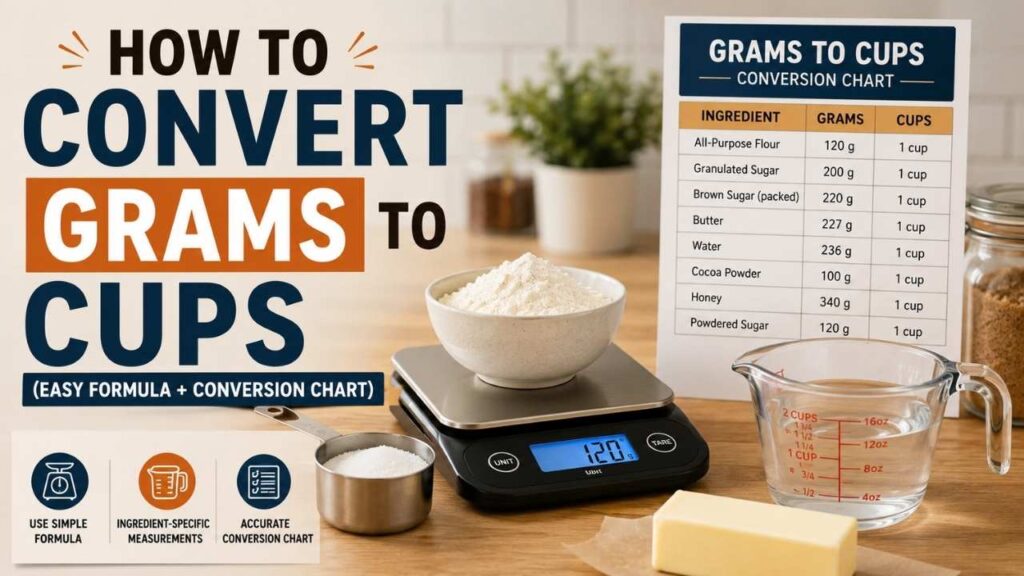

Knowing how to convert grams to cups can make cooking and baking much easier. Many recipes use grams, while others rely on cups. This difference often creates confusion, especially when you need a quick and accurate grams to cups conversion.
The most important thing to remember is that grams measure weight, while cups measure volume. Because ingredients have different densities, there is no single gram to cup conversion that works for every ingredient. For example, one cup of flour weighs much less than one cup of granulated sugar. That is why a grams to cups converter, conversion chart, or reliable formula can help you achieve accurate results.
In this guide, you will learn how to convert grams to cups, understand why conversions vary by ingredient, and use practical grams to cups conversion charts for flour, sugar, butter, water, and more. Whether you are baking a cake or preparing everyday meals, these simple cooking and baking conversion tips will help you measure ingredients with confidence.
Quick Answer
To convert grams to cups, divide the number of grams by the ingredient’s grams-per-cup value. Since grams measure weight and cups measure volume, the conversion varies by ingredient. For example, 120 grams of all-purpose flour equals about 1 cup, while 200 grams of granulated sugar equals about 1 cup. Always use an ingredient-specific grams to cups conversion chart for the most accurate results.
How To Convert Grams To Cups
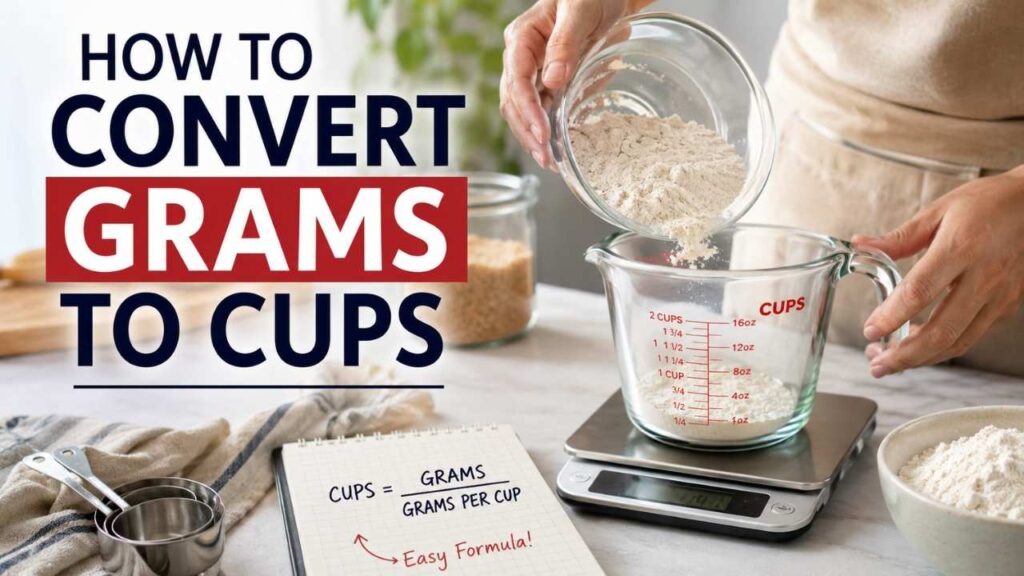
Learning how to convert grams to cups is simple once you understand the relationship between weight and volume. A gram measures weight, while a cup measures volume. Because every ingredient has a different density, the grams to cups conversion changes depending on what you are measuring.
For example, flour is lighter than sugar, so one cup of flour contains fewer grams than one cup of sugar. This is why you should never use a universal gram to cup conversion for every ingredient. Instead, use an ingredient-specific grams to cups conversion chart or calculator.
Many bakers prefer using grams because weight measurements provide better accuracy. However, if your recipe uses cups, you can still get reliable results by converting the measurements correctly. Understanding this process helps you follow recipes with confidence and avoid common baking mistakes caused by inaccurate measurements.
The Simple Conversion Formula
The basic grams to cups formula is:
Cups = Grams ÷ Grams Per Cup
To use this formula, you need to know how many grams fit into one cup of the ingredient you are measuring.
For example:
- 240 grams of flour ÷ 120 = 2 cups
- 200 grams of sugar ÷ 200 = 1 cup
- 227 grams of butter ÷ 227 = 1 cup
This formula works because it accounts for ingredient density, which plays a major role in every grams to cups conversion. Without knowing the grams-per-cup value, you cannot accurately convert weight into volume.
Whether you use a grams to cups converter, a baking calculator, or a conversion table, the same formula applies. Once you understand it, you can quickly convert common baking ingredients such as flour, sugar, butter, cocoa powder, and water.
Example Calculation
Let’s look at a practical example.
Suppose a recipe calls for 300 grams of all-purpose flour, but you only have measuring cups available. Since one cup of flour weighs approximately 120 grams, you can use the formula:
300 ÷ 120 = 2.5 cups
This means 300 grams of flour equals about 2½ cups.
Now consider sugar. One cup of granulated sugar weighs about 200 grams. If you need to convert 300 grams of sugar:
300 ÷ 200 = 1.5 cups
The result is different because sugar has a different density than flour.
This example shows why accurate grams to cups conversion depends on the ingredient. Using the wrong conversion can affect texture, consistency, and baking results. For the best outcome, always check an ingredient-specific conversion chart before measuring.
Why There Is No Universal Grams-To-Cups Conversion
Many people search for a single answer to how many cups are in a gram, but no universal answer exists. The reason is simple: ingredients have different densities.
A cup of water weighs approximately 236 grams, while a cup of flour weighs around 120 grams. A cup of honey weighs even more because it is denser than both flour and water.
Since grams measure weight and cups measure volume, every ingredient converts differently. This is why professional bakers rely on ingredient-specific measurements instead of generic conversion tables.
When you see a grams to cups converter, it usually asks you to select the ingredient first. The calculator then applies the correct density value to provide an accurate result.
Understanding this concept helps you avoid measurement errors and achieve more consistent results in cooking and baking.
Grams To Cups Conversion Chart
The easiest way to convert measurements is by using a reliable grams to cups conversion chart. Instead of performing calculations every time, you can quickly find the correct value for common ingredients. These charts are especially useful for baking, where accurate measurements help create consistent results.
Remember that each ingredient has its own conversion rate. Flour, sugar, butter, water, and honey all have different densities, so their cup measurements vary even when the gram amount stays the same.
Flour
| Grams | Cups |
| 50g | 0.42 cup |
| 100g | 0.83 cup |
| 120g | 1 cup |
| 200g | 1.67 cups |
| 250g | 2.08 cups |
| 500g | 4.17 cups |
Granulated Sugar
| Grams | Cups |
| 50g | 0.25 cup |
| 100g | 0.5 cup |
| 200g | 1 cup |
| 250g | 1.25 cups |
| 500g | 2.5 cups |
Brown Sugar
| Grams | Cups |
| 55g | 0.25 cup |
| 110g | 0.5 cup |
| 220g | 1 cup |
| 440g | 2 cups |
Powdered Sugar
| Grams | Cups |
| 30g | 0.25 cup |
| 60g | 0.5 cup |
| 120g | 1 cup |
| 240g | 2 cups |
Butter
| Grams | Cups |
| 57g | 0.25 cup |
| 113g | 0.5 cup |
| 227g | 1 cup |
| 454g | 2 cups |
Water
| Grams | Cups |
| 59g | 0.25 cup |
| 118g | 0.5 cup |
| 236g | 1 cup |
| 472g | 2 cups |
Honey
| Grams | Cups |
| 85g | 0.25 cup |
| 170g | 0.5 cup |
| 340g | 1 cup |
Cocoa Powder
| Grams | Cups |
| 25g | 0.25 cup |
| 50g | 0.5 cup |
| 100g | 1 cup |
| 200g | 2 cups |
Common Grams To Cups Conversions
Many users search for specific conversions rather than general formulas. The following quick-reference guide answers some of the most common questions related to grams to cups conversion.
How Many Cups Is 50 Grams?
The answer depends on the ingredient. For example, 50 grams of flour equals about 0.42 cup, while 50 grams of sugar equals about 0.25 cup.
How Many Cups Is 100 Grams?
100 grams of flour equals about 0.83 cup. For granulated sugar, 100 grams equals approximately 0.5 cup.
How Many Cups Is 150 Grams?
150 grams of flour equals roughly 1.25 cups. For sugar, 150 grams equals approximately 0.75 cup.
How Many Cups Is 200 Grams?
200 grams equals around 1.67 cups of flour or 1 cup of granulated sugar.
How Many Cups Is 250 Grams?
250 grams equals approximately 2.08 cups of flour or 1.25 cups of sugar.
How Many Cups Is 300 Grams?
300 grams equals about 2.5 cups of flour and 1.5 cups of sugar.
How Many Cups Is 400 Grams?
400 grams converts to roughly 3.33 cups of flour or 2 cups of sugar.
How Many Cups Is 500 Grams?
500 grams equals approximately 4.17 cups of flour or 2.5 cups of sugar. Always verify the ingredient before using a conversion value.
Ingredient-Specific Grams To Cups Tables
While a general conversion chart is useful, many readers want quick reference tables for specific ingredients. These tables make it easier to find accurate measurements without performing calculations. Since every ingredient has a different density, using ingredient-specific data helps improve consistency in cooking and baking.
Flour Conversion Table
| Grams | Cups |
| 60g | 0.5 cup |
| 120g | 1 cup |
| 180g | 1.5 cups |
| 240g | 2 cups |
| 360g | 3 cups |
Sugar Conversion Table
| Grams | Cups |
| 100g | 0.5 cup |
| 200g | 1 cup |
| 300g | 1.5 cups |
| 400g | 2 cups |
Butter Conversion Table
| Grams | Cups |
| 57g | 0.25 cup |
| 113g | 0.5 cup |
| 227g | 1 cup |
| 340g | 1.5 cups |
Water Conversion Table
| Grams | Cups |
| 118g | 0.5 cup |
| 236g | 1 cup |
| 354g | 1.5 cups |
| 472g | 2 cups |
These tables provide a quick way to handle common baking conversions while maintaining accuracy.
Why Grams And Cups Measure Different Things
Understanding the difference between grams and cups helps you make more accurate conversions. Many people assume that grams and cups measure the same thing, but they actually measure different properties of an ingredient.
Weight vs Volume
Grams measure weight, which tells you how heavy something is. Cups measure volume, which tells you how much space an ingredient occupies. Because these units measure different things, you cannot directly convert them without knowing the ingredient’s density.
Ingredient Density Explained
Density describes how much weight fits into a certain amount of space. Dense ingredients weigh more per cup, while lighter ingredients weigh less per cup. Honey, for example, weighs much more than flour because it packs more mass into the same volume.
Why Flour And Sugar Have Different Conversions
One cup of flour weighs about 120 grams, while one cup of granulated sugar weighs around 200 grams. Although both fill the same measuring cup, they have different densities. This difference explains why every ingredient requires its own grams-to-cups conversion.
US Cups vs Metric Cups
Cup measurements are not always the same around the world. Different countries use slightly different standards, which can affect your results if you follow international recipes.
US Cup
A standard US cup equals approximately 236.6 milliliters. Most American recipes use this measurement.
Metric Cup
A metric cup equals 250 milliliters. Many countries use this standard for cooking and baking.
Australian Cup
Australia also uses a 250-milliliter cup, making it similar to the metric cup.
Which Cup Standard Should You Use?
Always follow the cup standard used in the recipe. If the recipe comes from a US website, use US measurements. If it comes from Australia or another metric-based country, use metric cup measurements. Consistency is more important than the standard itself.
Should You Measure Ingredients By Weight Or Volume?
Both methods work, but each offers different advantages.
Advantages Of Using Grams
Measuring ingredients in grams provides excellent accuracy. Digital kitchen scales remove guesswork and help create consistent results. Professional bakers often prefer grams because small differences can affect the final product.
Advantages Of Using Cups
Cups are convenient and easy to use. Most home cooks already own measuring cups, making them accessible for everyday recipes. They also work well when precision is less critical.
What Professional Bakers Prefer
Most professional bakers prefer grams over cups. Weight measurements improve consistency, simplify recipe scaling, and reduce errors caused by packing or leveling ingredients differently.
Common Grams-To-Cups Conversion Mistakes
Even with a conversion chart, mistakes can happen. Understanding these common errors helps improve measurement accuracy.
Scooping Flour Incorrectly
Many people scoop flour directly from the bag, which packs it tightly and increases its weight. Instead, spoon flour into the measuring cup and level it with a knife.
Using The Wrong Cup Standard
Switching between US and metric cups can change ingredient amounts and affect recipe results.
Ignoring Ingredient Density
Using a flour conversion for sugar or butter leads to inaccurate measurements because each ingredient has a different density.
Rounding Measurements Too Much
Small rounding errors may not matter in some recipes, but they can significantly affect baking outcomes. Follow conversion values as closely as possible.
Tips For Accurate Baking Measurements
Accurate measurements help improve texture, flavor, and consistency in baked goods. Use a digital scale whenever possible because it provides the most reliable results. If you measure with cups, level dry ingredients with a straight edge and avoid packing them unless the recipe specifically instructs you to do so.
Always use the correct measuring tools. Dry measuring cups work best for flour and sugar, while liquid measuring cups work best for water, milk, and oils. Double-check conversion charts before measuring unfamiliar ingredients. Finally, stick to one measurement system throughout the recipe to maintain consistency and avoid confusion.
FAQs
Can You Convert Grams To Cups Exactly?
You can convert grams to cups accurately when you know the ingredient’s density. However, there is no single conversion that works for every ingredient.
How Many Grams Are In One Cup?
The answer depends on the ingredient. One cup of flour weighs about 120 grams, while one cup of granulated sugar weighs about 200 grams.
Why Do Conversions Change By Ingredient?
Different ingredients have different densities. This means the same cup can hold different weights depending on the ingredient.
Is A Cup Always 250 mL?
No. A US cup equals about 236.6 mL, while a metric cup equals 250 mL.
Is It Better To Use Grams Or Cups?
Grams provide greater accuracy and consistency. Cups offer convenience and work well for everyday cooking.
Conclusion
Knowing how to convert grams to cups makes it easier to follow recipes from around the world. The key is understanding that grams measure weight, while cups measure volume. Because ingredient density varies, every ingredient requires its own conversion value.
Whether you use a grams to cups converter, a baking calculator, or a conversion chart, always choose ingredient-specific measurements for the best results.
By following accurate conversion methods and understanding the difference between weight and volume, you can improve your cooking, achieve consistent baking results, and confidently convert flour, sugar, butter, water, and other ingredients whenever you need them.