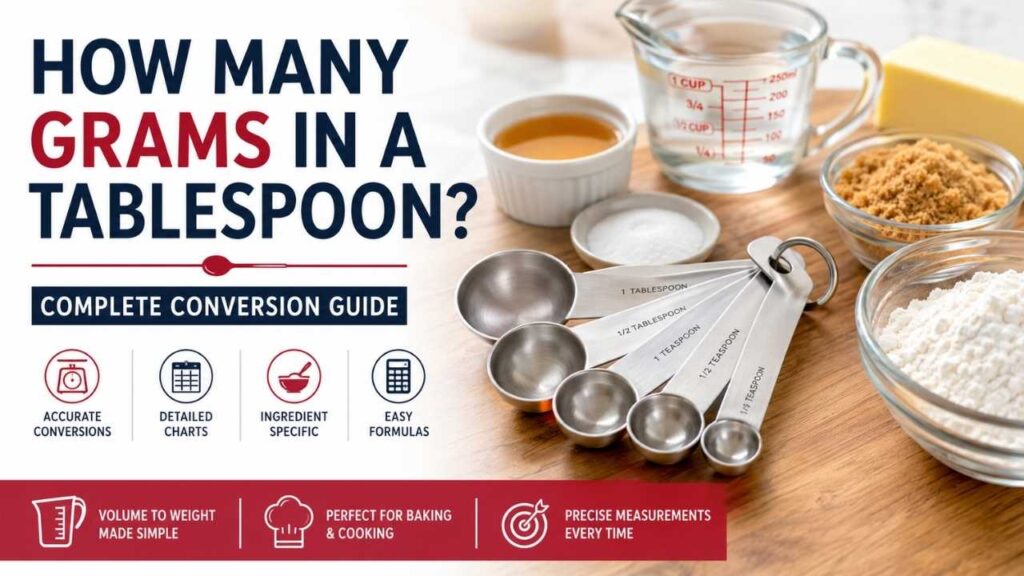

If you have ever wondered how many grams in a tablespoon, you are not alone. This is one of the most common questions people ask when following recipes, especially when baking or converting measurements from one system to another. While a tablespoon is a standard unit of volume, grams measure weight, which means there is no single answer that works for every ingredient.
The exact grams in a tablespoon depend on the ingredient you are measuring. For example, one tablespoon of water weighs about 15 grams, while one tablespoon of flour weighs much less. This difference happens because every ingredient has a unique density. Ingredients like honey, butter, sugar, and flour all have different weights even when they fill the same tablespoon.
Understanding tablespoon to grams conversion can help you achieve better results in cooking and baking. Accurate cooking measurements and baking measurements reduce mistakes, improve consistency, and make recipes easier to follow. In this guide, you will find a detailed tablespoon to grams conversion chart, ingredient-specific conversions, simple formulas, and practical tips to help you measure ingredients with confidence.
Quick Answer
There is no single answer to how many grams are in a tablespoon because a tablespoon measures volume, while grams measure weight. The exact tablespoon to grams conversion depends on the ingredient’s density. For example, 1 tablespoon of water weighs about 15 grams, flour about 8 grams, sugar about 12.5 grams, and honey about 21 grams.
How Many Grams Are In A Tablespoon?
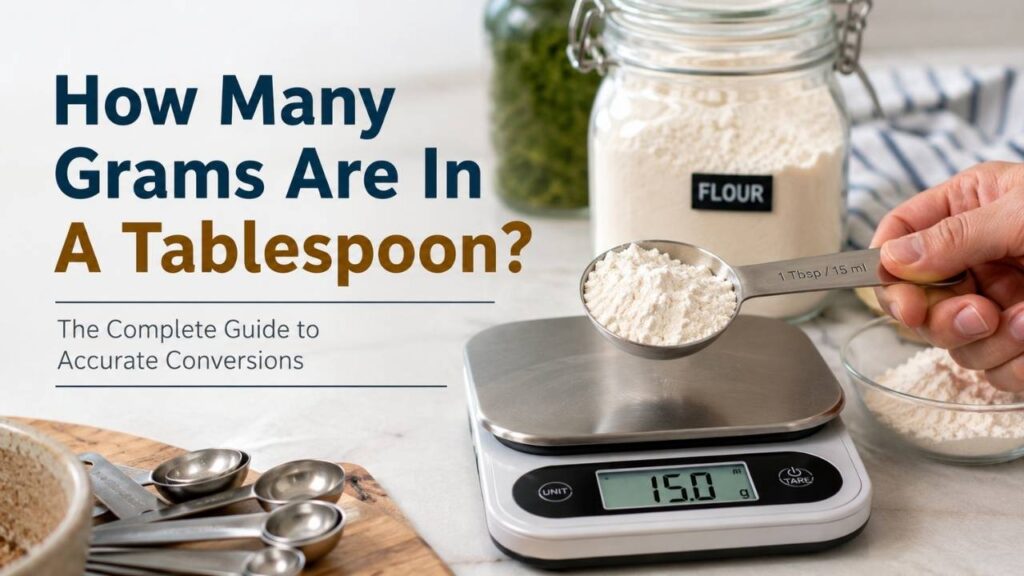
A tablespoon to grams conversion chart gives a quick way to measure ingredients without guessing. Since grams measure weight and tablespoons measure volume, every ingredient has a different weight. This is why a tablespoon of flour does not weigh the same as a tablespoon of honey or butter.
Using the correct grams per tablespoon conversion helps improve recipe accuracy and prevents measurement mistakes. Home cooks often rely on these charts when converting recipes from cups and spoons to metric measurements. Whether you are baking cookies, making sauces, or preparing desserts, knowing the correct grams in a tablespoon saves time and produces more consistent results.
Keep a reliable ingredient conversion chart nearby whenever you cook. It makes cooking measurements easier and helps you follow recipes with confidence, especially when precision matters.
Why Does A Tablespoon Equal Different Gram Amounts?
Many people assume that one tablespoon always equals the same number of grams, but that is not true. A tablespoon measures volume, while grams measure weight. The missing factor is ingredient density.
Density refers to how much matter fits into a certain space. For example, honey is much denser than flour, so one tablespoon of honey weighs more than one tablespoon of flour. This difference explains why tablespoon to grams conversion changes from one ingredient to another. Understanding volume to weight conversion helps you avoid errors when cooking and baking.
Recipes become more accurate when you measure ingredients by weight rather than volume. Whether you need a tablespoon of sugar in grams, a tablespoon of butter in grams, or a tablespoon of flour in grams, the answer depends on the density of that ingredient.
How To Convert Tablespoons To Grams
Learning how to convert tablespoons to grams is simple once you understand the process. The basic formula is to multiply the number of tablespoons by the ingredient’s grams-per-tablespoon value. Because every ingredient has a different density, there is no universal conversion.
For example, one tablespoon of water weighs about 15 grams, while one tablespoon of flour weighs around 8 grams. This simple tablespoon to grams formula allows you to convert measurements quickly. Accurate weight conversion is especially useful in baking because small measurement differences can affect the final result.
A kitchen scale provides the most precise measurements, but a reliable grams conversion chart also helps. By understanding this method, you can confidently convert recipes, adjust serving sizes, and achieve better consistency in your favorite dishes.
Common Ingredient Conversions
Most people searching for how many grams are in one tablespoon want ingredient-specific answers. One tablespoon of water weighs about 15 grams, while one tablespoon of flour weighs about 8 grams.
A tablespoon of granulated sugar weighs roughly 12.5 grams, butter about 14 grams, and honey around 21 grams. Salt, cocoa powder, and oil each have their own unique conversion values as well. These differences happen because every ingredient has a different density. Keeping a baking conversion chart makes it easier to measure ingredients correctly.
Whether you need a tablespoon of sugar in grams, a tablespoon of butter in grams, or a tablespoon of honey in grams, using accurate values helps improve recipe results. Proper food measurement conversion ensures consistent texture, flavor, and baking performance every time.
Tablespoons To Grams For Baking
Professional bakers prefer grams because they provide greater accuracy than tablespoons. A tablespoon can vary depending on how tightly you pack an ingredient or how level the spoon is. Even a small measurement error can change the texture of cakes, cookies, or bread.
This is why many baking recipes include grams conversion instead of volume measurements. Using a kitchen scale removes guesswork and improves consistency. Accurate baking measurements also make it easier to scale recipes up or down. While tablespoons remain useful for quick cooking, grams offer better control and precision.
Understanding tablespoons to grams for baking helps you avoid common mistakes and achieve reliable results. If you want professional-quality baking, measuring ingredients by weight is one of the simplest and most effective changes you can make.
Tablespoon Sizes Around The World
Many people do not realize that a tablespoon is not exactly the same in every country. In the United States, one tablespoon equals about 14.79 milliliters. In Australia, one tablespoon equals 20 milliliters, which is noticeably larger. These differences can affect tablespoon to gram conversion, especially when baking or following international recipes.
A recipe written in Australia may produce different results if you use a standard U.S. tablespoon. Understanding these measurement differences helps you make more accurate conversions. This information becomes especially important when working with ingredients that require precision.
When converting tablespoons to grams, always check which measurement standard the recipe uses. Knowing the correct tablespoon size improves recipe accuracy and helps prevent confusion when using recipes from different parts of the world.
Grams To Tablespoons Conversion Chart
While many people search for tablespoon to grams conversion, others need the reverse calculation. A grams to tablespoons conversion chart helps you determine how many tablespoons are needed when a recipe lists ingredients in grams.
This conversion works best when you know the ingredient’s density. For example, 15 grams of water equals about one tablespoon, while 15 grams of flour equals nearly two tablespoons. Because ingredients vary in weight, a single conversion cannot apply to everything.
Using a reliable kitchen conversion chart makes recipe preparation easier and more accurate. Whether you are converting flour, sugar, butter, or honey, understanding both directions of the conversion provides greater flexibility. This knowledge helps you work with recipes from different countries and measurement systems without confusion.
Kitchen Tools That Improve Measurement Accuracy
The right kitchen tools can greatly improve your cooking measurements and baking measurements. Measuring spoons work well for quick tasks, but a digital kitchen scale provides the most accurate results. Scales allow you to measure ingredients directly in grams, eliminating the need for repeated conversions.
This level of precision helps produce consistent results, especially in baking. Measuring cups and spoons remain useful, but they can introduce small errors due to packing, leveling, or ingredient texture. A kitchen scale removes these variables and improves accuracy.
Many professional bakers rely on scales because they simplify weight conversion and reduce mistakes. Combining a quality scale with a reliable ingredient conversion chart gives you everything needed for precise measurements and better recipe outcomes.
FAQs
Is 1 tablespoon equal to 15 grams?
Not always. A tablespoon measures volume, while grams measure weight. One tablespoon of water weighs about 15 grams, but other ingredients such as flour, sugar, butter, and honey have different weights because they have different densities.
How many grams are in a tablespoon of flour?
One tablespoon of all-purpose flour weighs approximately 8 grams. The exact weight may vary slightly depending on how the flour is scooped and measured.
How many grams are in a tablespoon of sugar?
One tablespoon of granulated sugar weighs about 12.5 grams. Brown sugar and powdered sugar have different weights because their density is different.
How many grams are in a tablespoon of butter?
One tablespoon of butter weighs approximately 14 grams. This conversion is commonly used in baking and cooking recipes.
How many grams are in a tablespoon of honey?
One tablespoon of honey weighs around 21 grams. Honey is denser than many other ingredients, which is why it weighs more.
Why does a tablespoon have different gram values?
Different ingredients have different densities. Since a tablespoon measures volume, the weight in grams changes depending on the ingredient being measured.
How many grams are in 2 tablespoons?
The answer depends on the ingredient. For example, 2 tablespoons of water equal about 30 grams, while 2 tablespoons of flour equal about 16 grams.
How many grams are in 3 tablespoons?
Three tablespoons of water weigh about 45 grams. For other ingredients, multiply the grams-per-tablespoon value by three to find the correct weight.
Can I use tablespoons instead of grams in baking?
You can, but grams provide much better accuracy. Professional bakers prefer grams because weight measurements create more consistent and reliable results.
What is the easiest way to convert tablespoons to grams?
The easiest method is to use a tablespoon to grams conversion chart or a digital kitchen scale. Both options help you measure ingredients accurately and reduce conversion mistakes.
Conclusion
Understanding how many grams in a tablespoon can make cooking and baking much easier. Since a tablespoon measures volume and grams measure weight, the exact conversion depends on the ingredient’s density.
This is why a tablespoon of flour, sugar, butter, or honey all have different weights. Using a trusted tablespoon to grams conversion chart helps you measure ingredients more accurately and achieve better results. Whether you are following a baking recipe, scaling ingredients, or converting international measurements, knowing the correct conversion is valuable.
A kitchen scale offers the highest level of precision, but conversion charts remain a practical solution for everyday cooking. By understanding grams per tablespoon conversion, you can improve consistency, reduce measurement errors, and prepare recipes with greater confidence every time.